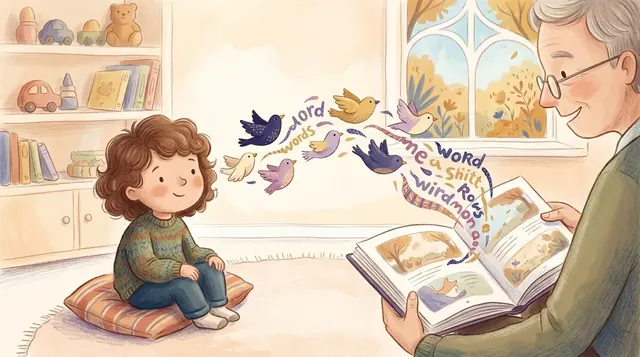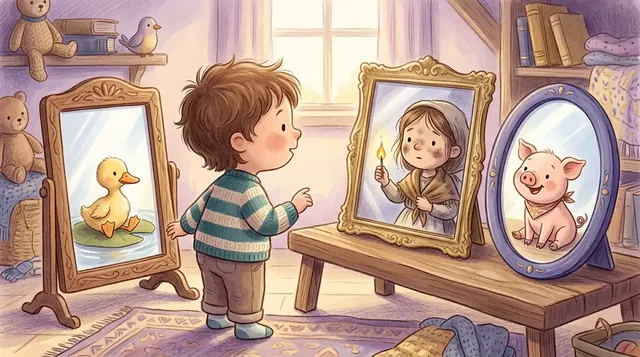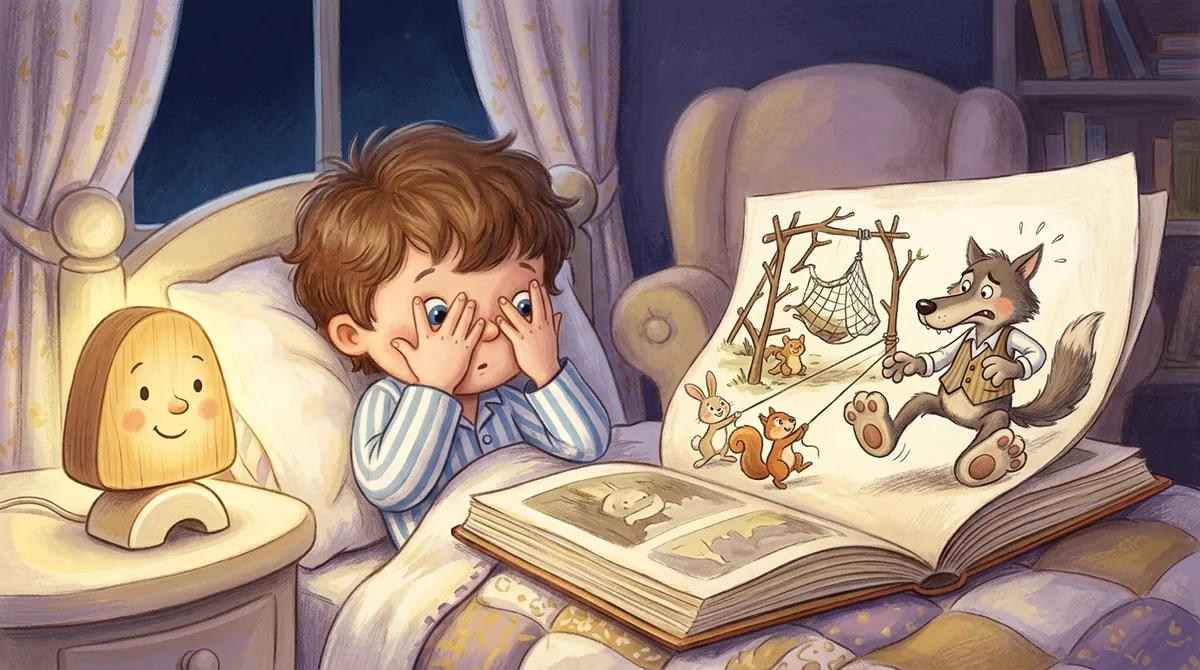
No, fairy tales are not too scary, provided you choose the version, the age and the hour with some care. The wolf, the witch and the giant are not defects in the old stories that a kinder age should edit out; they are the reason the stories work. A child who has been frightened by a wolf for four minutes and then watched it defeated has learned, in the body rather than the head, that fear ends. This guide explains what the fear is doing, gives you four questions for judging any story on any night, and says exactly what to do when you get it wrong.
What the fear is for
Children seek fear out. They climb too high, jump from too far, ask for the story with the witch and then hide under the blanket during it. Developmental psychologists usually describe this as practice: a child rehearses the feeling of danger in a situation they control, so that the feeling is familiar when a situation they do not control arrives. A fairy tale is the safest version of this rehearsal there is, because the danger is fictional, the parent is present, and the ending is fixed. The wolf in The Wolf and the Seven Little Kids will eat six of the kids and the mother goat will cut them out alive every single time.
Bruno Bettelheim made the strong version of this argument in The Uses of Enchantment in 1976: that fairy tales let children work through fears they cannot name by giving them a shape (a witch, a forest) and a resolution. His psychoanalytic reasoning has not aged well and his own conduct has been seriously questioned, but the core observation that children use frightening stories to master fear has stood up, and any parent who has watched a four-year-old demand the same scary story nightly for a fortnight and then drop it has seen the mechanism run its course.
The fear also carries the moral. The child who follows Red Riding Hood off the path is frightened on her behalf, and that fear is how the rule about strangers gets installed. Take out the wolf and you have a story about a girl delivering cake.
The four questions
Rather than sorting stories into "scary" and "safe", ask four questions about tonight's story and tonight's child. The answers change from night to night, which is why no fixed list works.
1. Which version?
Almost every famous tale exists in a spectrum of retellings, from the Grimms' first edition of 1812, which was not written for children and reads like it, to Victorian nursery versions with the blood removed. This site carries two Red Riding Hoods precisely so you can choose. In Little Red Riding Hood the wolf swallows the grandmother and the girl, and the huntsman cuts them out; the "better to eat you with" line is delivered in full. In the gentler retelling the wolf is outwitted before anyone is eaten and the stakes stay at the level of a chase. Both keep the wolf, the forest and the disguise, which are the parts that matter. Read the moral line and the suggested ages on the story page before you begin; it takes ten seconds and tells you which version you have.
The Grimm collection is the one to check most carefully, and our guide to who the Brothers Grimm were explains how the stories were softened edition by edition. If a tale is right in shape but wrong in one scene, our guide to adapting a fairy tale for your child shows how to soften a moment without collapsing the story.
2. Which age?
A rough map, which your own child will redraw:
- Under three: fear in stories is mostly a matter of voice. The idea of a wolf does not frighten a two-year-old, but a growl can. Keep villains comic and keep your voice light. The Three Billy Goats Gruff is the classic first troll: loud, stupid, and knocked into the river.
- Three to five: the age of the witch. Children this age are frightened by transformation and by being lost, and fascinated by both. Hansel and Gretel is right for the older end of this range and wrong for the younger; the abandonment in the first act is harder for a three-year-old than the oven is.
- Five to eight: the age of the villain. Children now enjoy a threat that is properly threatening and a hero who wins by brains. The giants and trolls collection is built for this age; Jack and the Beanstalk and The Giant Who Had No Heart in His Body both let a small hero beat a big one.
- Eight and up: the age of dread rather than fright. The Baba Yaga and The Snow Queen work on atmosphere, and older children find that more satisfying than a monster.
3. Which hour?
The same story at 6.30pm and 8.30pm is two different stories. Fear raises arousal, and arousal delays sleep; a frightening tale as the last thing before lights out asks a child to come down from it alone in the dark. The rule is simple: scary stories go first, calm stories go last. Read the wolf, then read something from the gentle end of the library, and let the second story do the settling. If there is only time for one story tonight, tonight is not the night for the witch. Our guide to what to do when your child will not settle covers the evening when you got this wrong.
4. Which child, this week?
A child who is fine with wolves in March may not be in September, when they have started school and are lying awake anyway. Fairy-tale fears attach to real ones. A child with a new baby in the house hears Hansel and Gretel as a story about parents who choose to lose their children; a child whose grandparent is ill hears Red Riding Hood's grandmother differently. None of this means avoiding the story; it means reading it on a good night and being ready for the question it will provoke. The stories about big feelings collection exists for the weeks when the real fear needs a story of its own.
Wolves, witches and giants: what each one teaches
The three great fairy-tale villains frighten in different ways and teach different things, and it helps to know which you are reading.
The wolf is the fear of being deceived. In the wolf stories he almost never wins by strength; he wins by disguise, flattery and a soft voice, and he is beaten by a child or a goat who notices something wrong. "What big teeth you have" is a lesson in looking closely. The wolf is also the villain most often redeemed in modern retellings, and Huffy Puffy Wolf on this site is a good bridge for a child who has become frightened of all wolves and needs one who is merely hungry.
The witch is the fear of the adult who is not what she seems. Witches in the witches and wizards collection offer sweets, houses and kindness, and the child in the story must work out when to stop trusting. It is the most useful fear in the set, and the one to handle most carefully with the under-fives, for whom "an adult might be bad" is a genuinely new idea.
The giant is the fear of the big and stupid, and it is the most fun. Giants are beaten by wit, not force, which is why every child loves the moment Jack takes the axe to the beanstalk. The bravery and courage theme is essentially a catalogue of small heroes defeating large villains, and a child who has heard twenty of them has twenty models of what courage looks like: not fearlessness, but acting while afraid.
Signs you misjudged it, and what to do
Some fright during a story is the story working. These are the signs it was too much:
- The fear outlives the story: the child is still asking about the wolf at breakfast, or will not walk past the wardrobe.
- The child refuses the story a second time. Children re-request stories they have mastered; they avoid stories that mastered them.
- The villain turns up in play in a way the child cannot control: not "I'm the wolf, run!" but "the wolf is coming and I can't stop it".
- Sleep changes for more than a night or two.
When you see them, do this, in order.
- Finish the story. If you stopped mid-way, go back tomorrow in daylight and read to the end. An undefeated wolf is far worse than a defeated one; the ending is the medicine.
- Name the fear in the story's terms. "You didn't like it when the wolf was in Grandma's bed." Not "there's nothing to be scared of", which the child knows is untrue.
- Give the child a tool. "What would you have said to the wolf?" Children who have a plan for the villain stop being afraid of it.
- Read a short safe story last, tonight and for a few nights: something from the gentle end of the library with nobody in it who bites.
- Come back to the story in a month, earlier in the evening, and expect it to be asked for.
What not to do
Do not remove every villain. A library of stories in which nothing is at stake produces a child who has never practised fear, and the first real fright, whether a barking dog or a fire drill, arrives without rehearsal. Do not lie about the ending to make it gentler and then read the real one later; children remember and feel tricked. Do not use the villain as a threat ("the wolf will get you if you don't go to sleep"); it converts a story the child controls into one they do not, and it is the fastest way to lose the story entirely. And do not assume your child's fear matches yours. Many adults find Hansel and Gretel unbearable and their children find it thrilling; the child is usually the better judge.
Tonight
If your child is under four, read The Three Billy Goats Gruff with a troll voice that is more silly than scary. If they are older, read Little Red Riding Hood early in the evening, or the gentler retelling if they are new to wolves, and follow it with two minutes of something calm. Watch what they ask for tomorrow; that is your answer to whether it was the right choice.