
Stories about big feelings
Sad, scared, jealous, cross: stories that name the feeling and let it pass
This focused shelf names a difficult feeling and lets it pass: fear, jealousy, sadness, shame and anger. Use the story finder to narrow it further by age, time and emotional intensity.
A story is the safest place to meet a big feeling. These tales are about being scared of the dark, jealous of a new baby, lonely in a new place, or simply cross, and about what helped.
Where to start with stories about big feelings
12 of 57 to start with. The full list follows.
 2 min
Ages 3–8 · Bravery & Courage
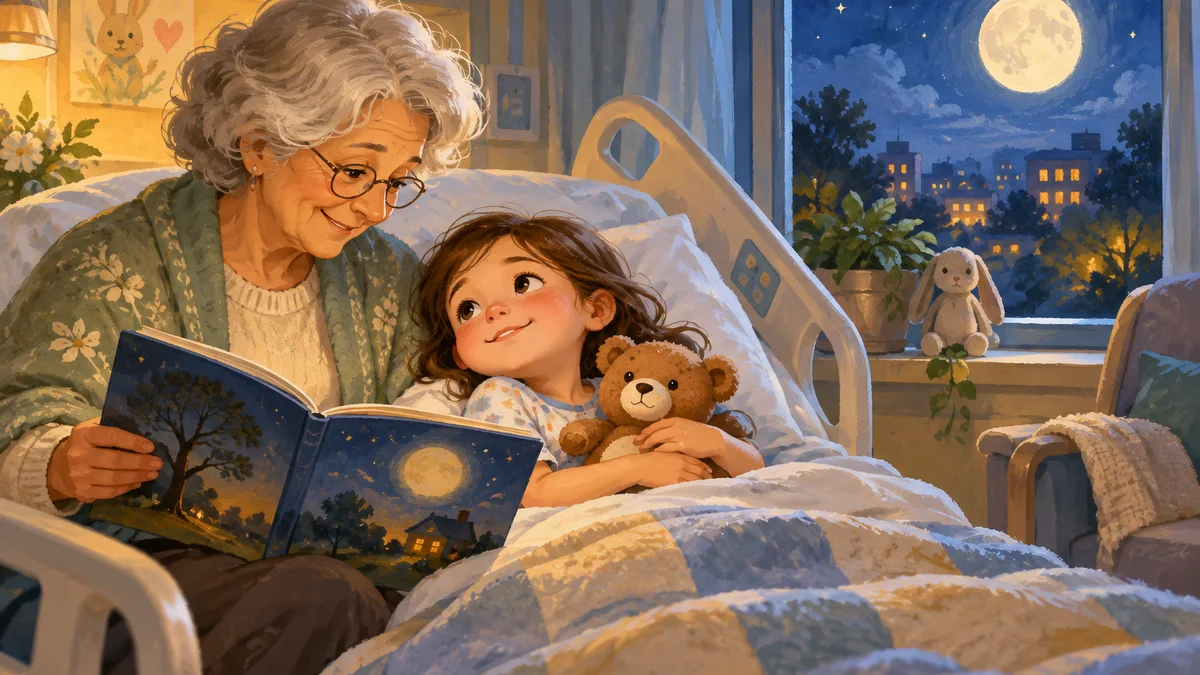
Bea and the Hospital Moon
A hospital room does not know Bea's bedtime yet. With Grandma, Button Bear, clear explanations and the same moon…
 2 min
Ages 5–9 · Friendship
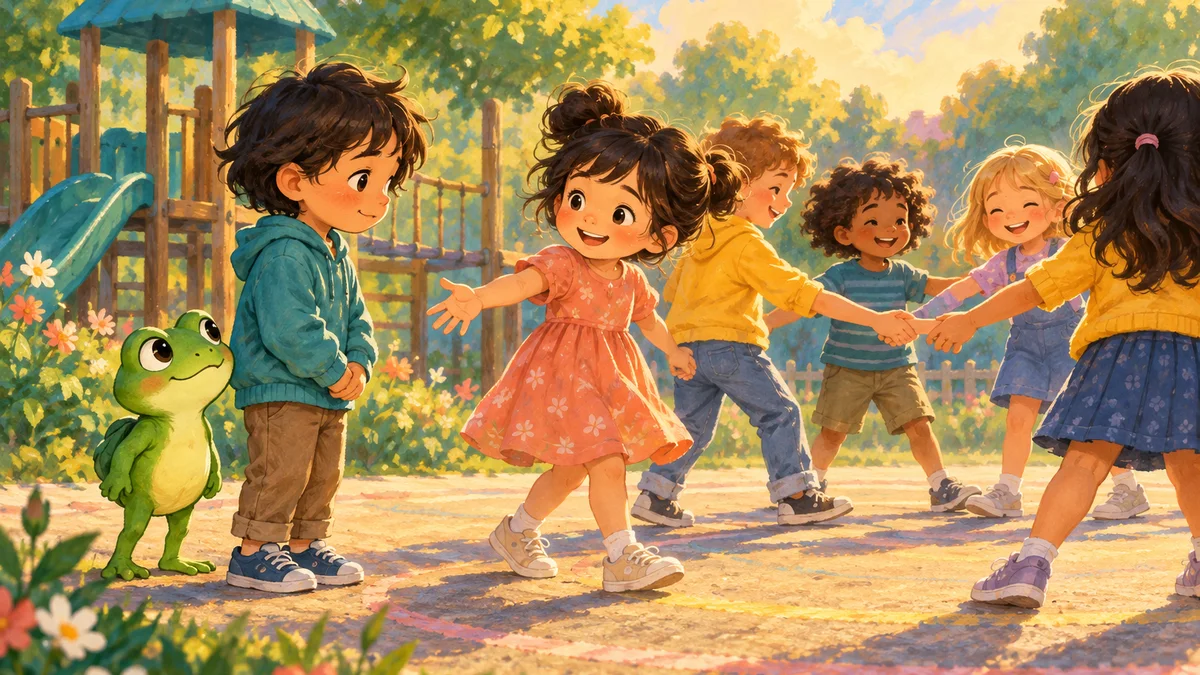
Finn and the Unkind Game
Finn is excluded by rules that keep changing. A teacher helps him name the unkind behaviour, walk away and tell, then…
 2 min
Ages 3–7 · Bravery & Courage
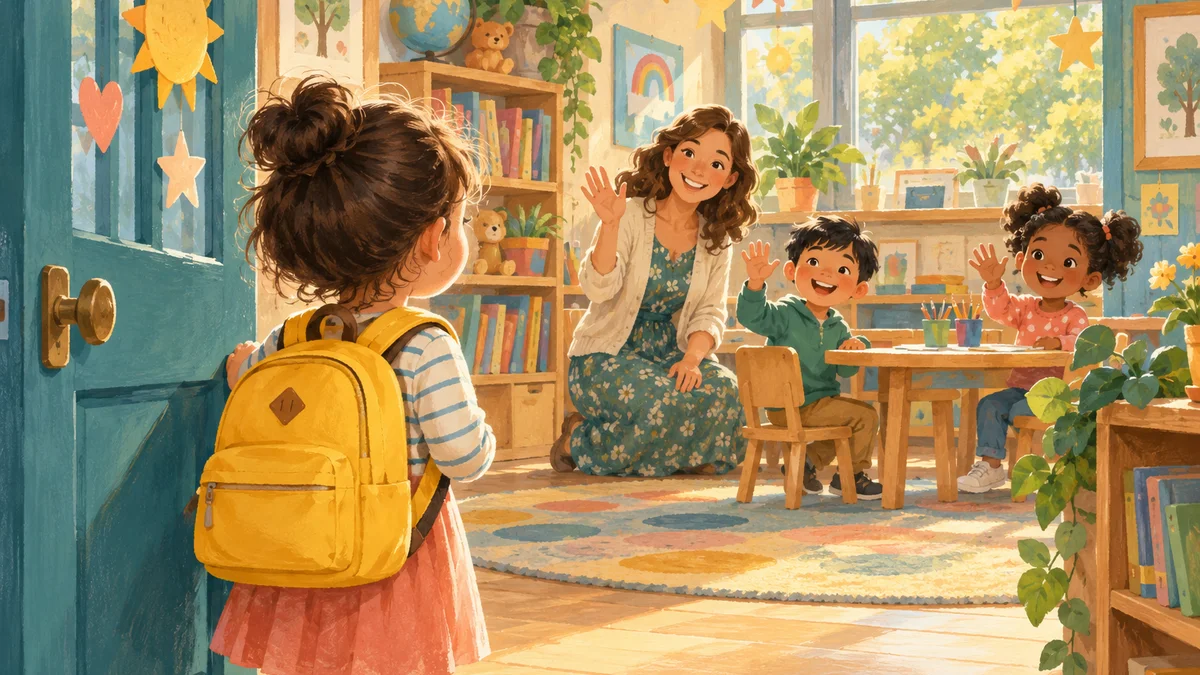
Maya's Brave First Morning
Maya does not have to be ready for a whole first day. One hook, one letter and one skipping rope turn a frightening…
 2 min
Ages 3–8 · Family
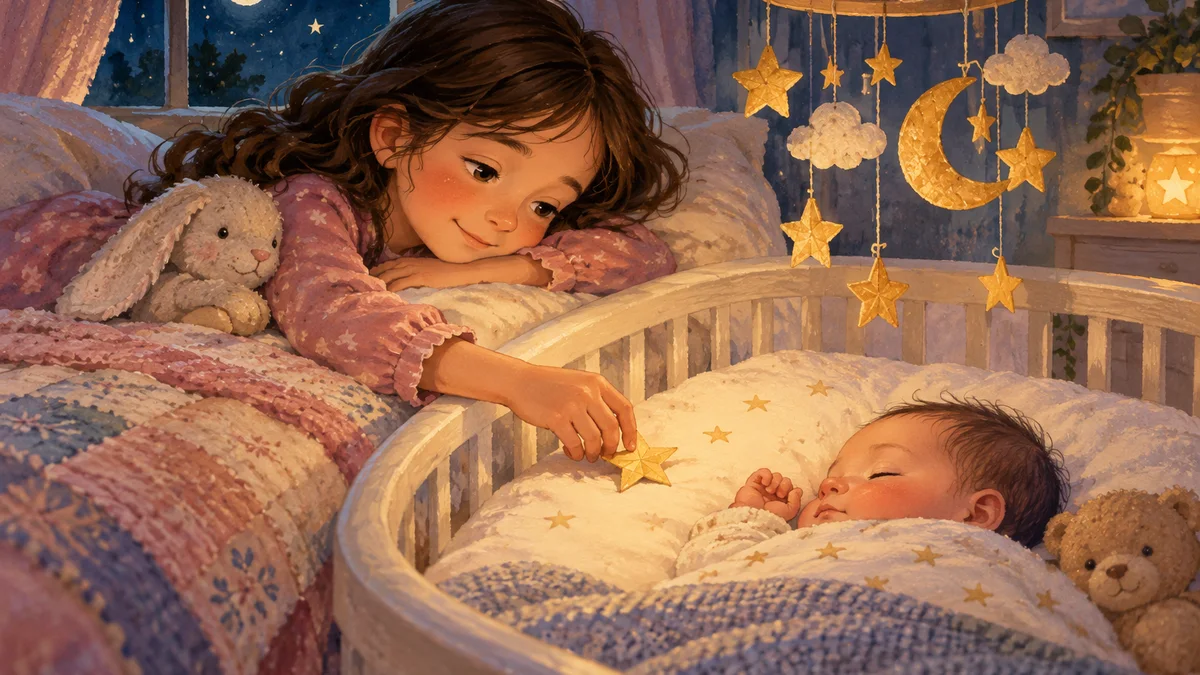
Nico and the New Baby Star
Nico does not instantly love being a big sibling. Ten protected minutes with a parent give his mixed feelings room…
 2 min
Ages 3–7 · Belonging
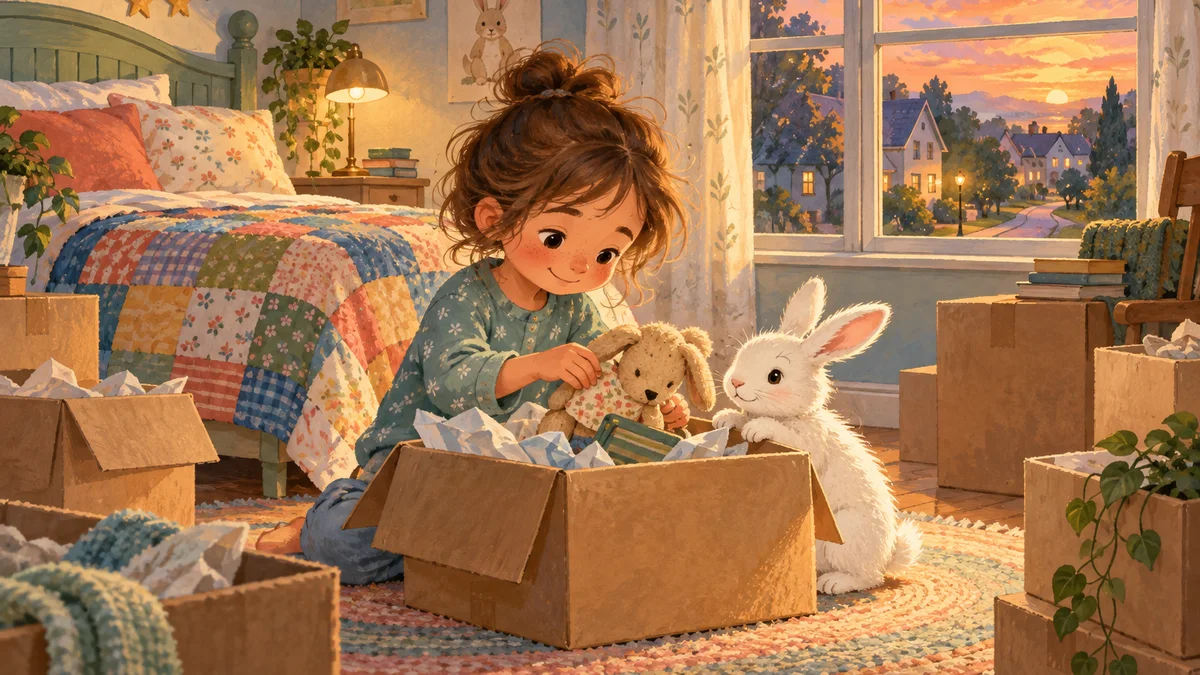
Rabbit's New Street
A new house feels wrong until Imani and Rabbit fill it with familiar things, learn the street's sounds and let new…
 2 min
Ages 3–8 · Bravery & Courage
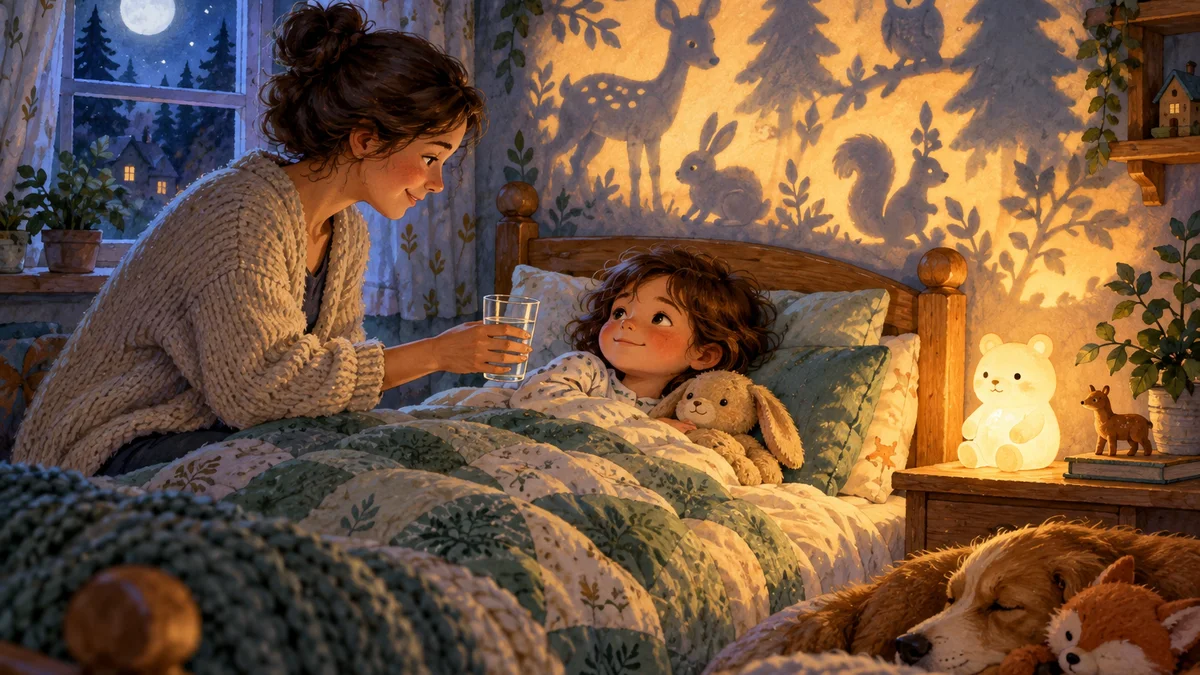
The Friendly Shadows
A bad dream leaves Owen frightened of familiar shadows. A parent validates the feeling, checks the room and helps Owen…
 2 min
Ages 5–10 · Love
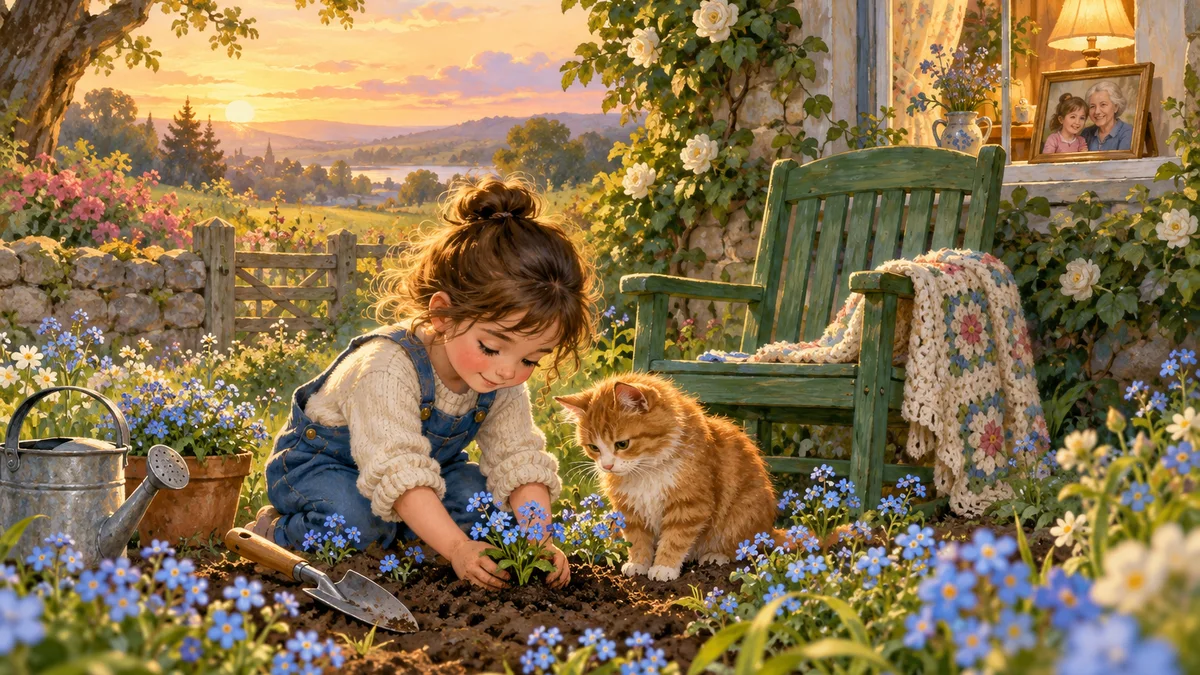
The Goodbye Garden
Asha and her cat Pip help plant Grandma's favourite flowers beside an empty chair. Stories, laughter and tears give…
 2 min
Ages 4–8 · Bravery & Courage
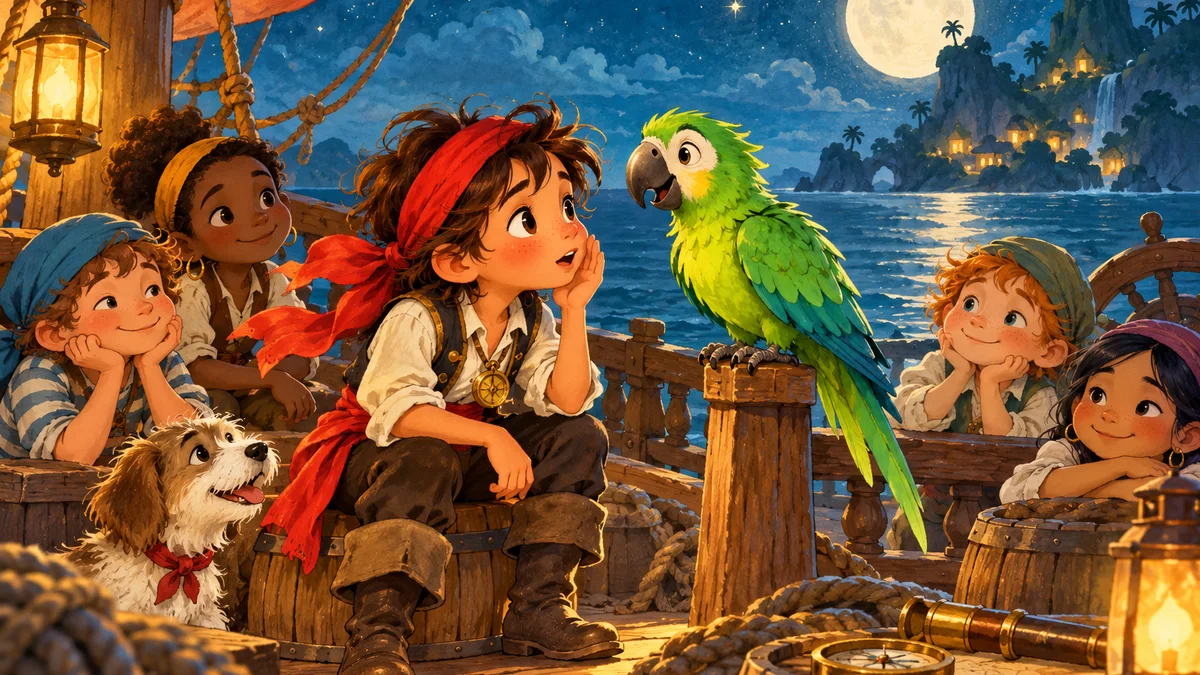
The Pirate Who Lost Their Roar
Captain Kit loses their famous roar before a race and discovers that listening, clear words and helping another crew…
 2 min
Ages 4–8 · Identity
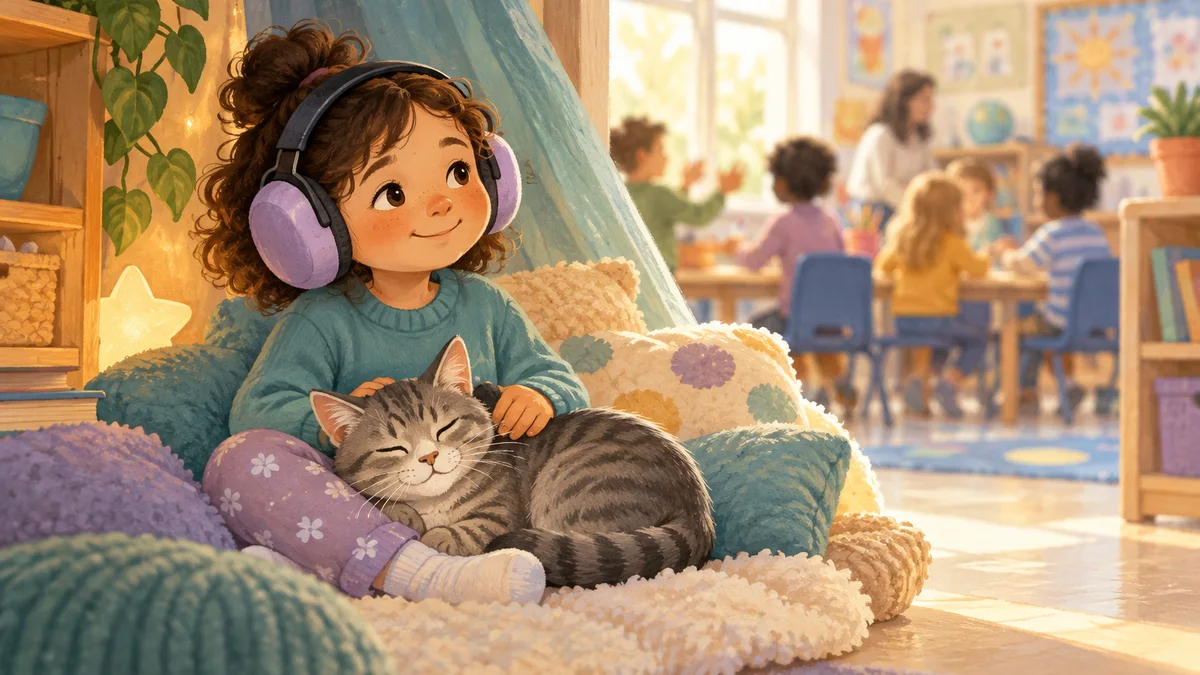
The Quiet Corner Cat
When classroom noise becomes too much, Leo learns from a courtyard cat that a quiet pause can help him return and take…
 2 min
Ages 4–8 · Bravery & Courage
The Sleepover Lantern
When a first sleepover stops being funny and starts feeling far from home, Hana asks for help and learns that staying…
 2 min
Ages 4–8 · Magic
The Unicorn and the Paper Moon
Elin and a shy silver unicorn mend a torn paper moon and a cracked horn with golden seams, discovering that repair need…
 2 min
Ages 4–8 · Family
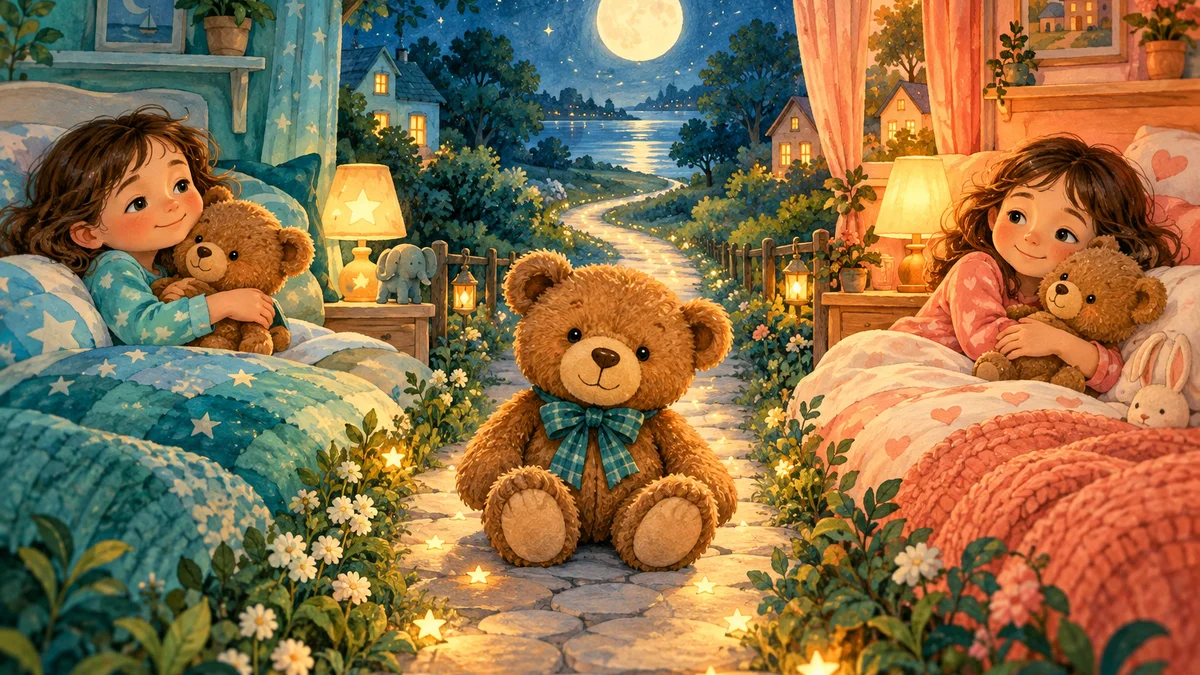
Two Bedrooms for Teddy
Sam and Teddy begin moving between two parents' homes. Familiar bedtime objects, repeated goodnight words and love in…
Finding the story that matches tonight’s feeling
This is the collection parents come to with a specific problem rather than a spare twenty minutes. The stories are grouped here by the feeling they handle, because that is how the question arrives.
Worry and fear
The Anxious Leaf is the most direct, five minutes for ages 3–7, and it says plainly that being frightened is allowed and temporary. Chicken Licken at nine minutes does the same job through comedy: the sky is not falling, and everyone panicked for nothing.
Feeling left out or less than
The Ass and the Lapdog is six minutes about watching someone else be favoured. The Birds, the Beasts, and the Bat at seven minutes is about not fitting into either group, which is a specific and painful feeling a seven-year-old can usually name. My Own Self runs ten minutes on the same ground more gently.
Sadness and hard times
A Little Princess is eleven minutes, ages 6–10, retold from Frances Hodgson Burnett, and it is the site's most sustained story about keeping going when everything has got worse. Pandora’s Box at six minutes ends on the fact that hope was in the box too.
Stories that admit things are hard
The reason these work is not that they teach a lesson. It is that they say the difficult thing out loud in someone else's voice, which is much easier for a child to accept than a conversation that starts "I noticed you seemed upset today".
The Butterfly at five minutes is the best example: it is about change being frightening and worth doing anyway, and it never once addresses the child. Riquet With The Tuft at seven minutes takes on how you look and what that is worth. The Blue Bird, nine minutes for ages 6–10, is about looking everywhere for happiness and finding it at home.
Say nothing at the end. If your child wants to connect it to their own day, they will, and our guide to how stories teach empathy explains why the indirect route does more than the direct one.
When a feelings story is the wrong choice
Three evenings to avoid
Three situations where you should pick something else. When the feeling is still raw, an hour after the argument, a story about jealousy reads as a telling-off. When your child is overtired, anything that asks for reflection makes bedtime longer. And when they have asked for something funny, give them something funny.
In all three cases take a short, undemanding story from gentle sleepy stories or a loud one from funny bedtime stories, and come back to this page tomorrow, when it is not about anything.
When the problem is not a story problem
If the worry is about the dark, about monsters or about the story itself, fairy tales and fear is the more useful page. For a child who keeps asking about one particular story, reading the same story every night explains what that repetition is doing.
Short ones for a night with no time
When there is no time to browse, these are the ones to remember. The Bow and the Lyre is three minutes on differences being the point. Goldilocks and The Three Bears at four minutes is quietly about apologising. Lily and the Lion and The Boy Who Cried Wolf both run five.
For anything longer, 10-minute bedtime stories gathers the full-length options, and kindness stories sits next door with a warmer version of much the same material.
Every story in stories about big feelings, A to Z
- A Little Princess
- Bea and the Hospital Moon
- Finn and the Unkind Game
- Goldilocks and The Three Bears
- Henny Penny
- Jimmy Scarecrow’s Christmas
- Lily and the Lion
- Maya's Brave First Morning
- My Own Self
- Nico and the New Baby Star
- Pandora’s Box
- Rabbit's New Street
- Riquet With The Tuft
- Snow White and the Seven Dwarfs
- Snow White and the Seven Dwarves
- The Anxious Leaf
- The Ass and the Lapdog
- The Bear and the Two Travelers
- The Birds, the Beasts, and the Bat
- The Blue Bird
- The Bow and the Lyre
- The Boy Who Cried Wolf
- The Butterfly
- The Cock and the Jewel
- The Coral Queen and the Space Pirate’s Curse
- The Dog in the Manger
- The Dolphins, the Whales, and the Sprat
- The Enormous Turnip
- The Fiery Dragon
- The Fox Without a Tail
- The Friendly Frog
- The Friendly Shadows
- The Golden Goose
- The Goodbye Garden
- The Hare with Many Friends
- The Lion, the Bear, and the Fox
- The Lion, the Fox, and the Beasts
- The Man and the Wooden God
- The Missing Unicorn
- The Monkey’s Heart
- The Nurse and the Wolf
- The Old Man and His Grandson
- The Pirate Who Lost Their Roar
- The Princess and the Pea
- The Princess Mayblossom
- The Princess Who Wasn’t
- The Quiet Corner Cat
- The Rainbow Bridge of the Galactic City
- The Six Swans
- The Sleepover Lantern
- The Twelve Dancing Princesses
- The Two Pots
- The Ugly Duckling
- The Unicorn and the Paper Moon
- The Wolf and the Shepherd
- Together We Are Good: The Day the Little Helpers Saved the Town
- Two Bedrooms for Teddy
Collections that share these stories
Ranked by how many stories they have in common with this one.
Questions about stories about big feelings
What should I read to a child who is anxious?
The Anxious Leaf, five minutes for ages 3–7, is the most direct. Chicken Licken handles the same worry through comedy in about nine minutes.
How do I narrow the feelings stories?
Open the story finder and combine the situation with your child's age, the time available and a low, medium or high emotional intensity.
Should I explain the lesson at the end of the story?
Usually not. Children connect a story to their own day in their own time, and an explanation at the end tends to turn the story into a telling-off.
Is there a story about feeling left out?
The Birds, the Beasts, and the Bat, seven minutes, is about belonging to neither group. The Ass and the Lapdog covers watching someone else be favoured.
Can I read one of these straight after an argument?
Better not. An hour after the event a story about the same feeling reads as a lecture. Read something gentle tonight and come back to it another day.