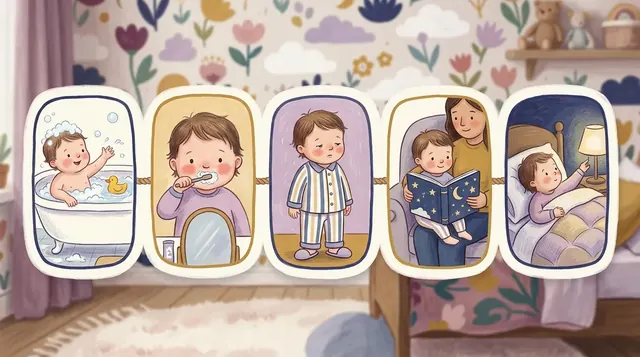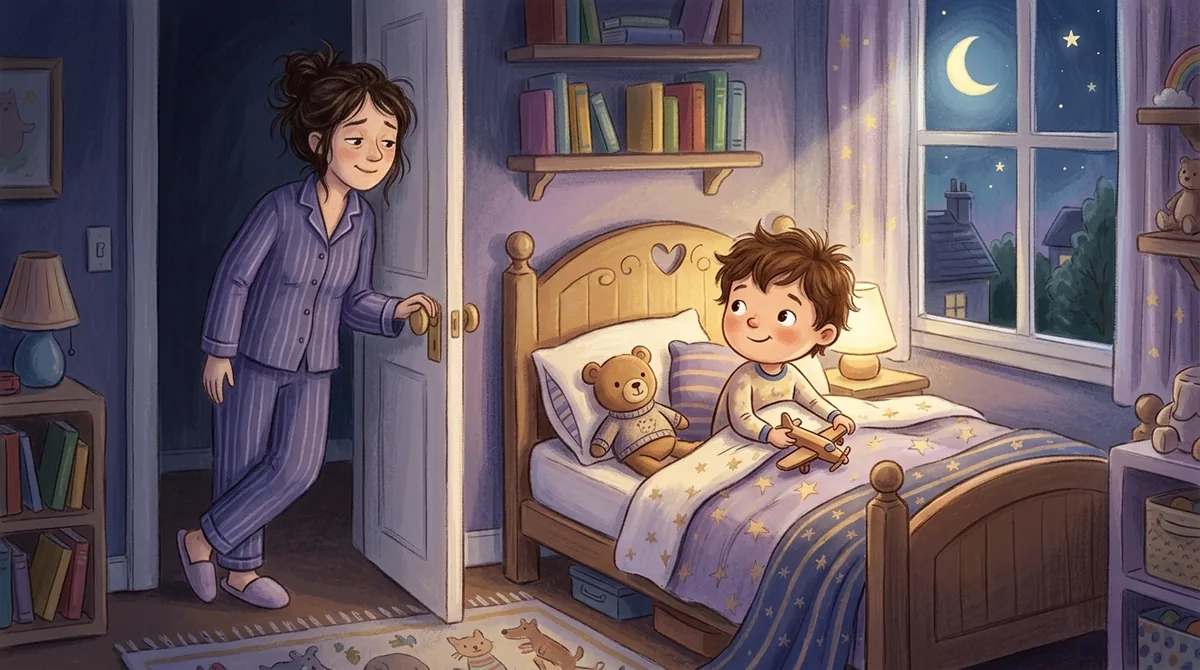
When the story ends and the child does not settle, the temptation is to do something, and the wrong something makes tomorrow worse. Bedtime resistance after the story is almost always one of four things: the child is overtired, the routine has drifted, there is a fear that has not been named, or this is a bid for more of you. They look alike at half past seven and they need different answers, so the first job is diagnosis, and it takes about a minute.
Three questions to ask before you do anything
- How late is it, really? Count back from the morning wake-up time. If a child who needs eleven hours is being put down ten hours before they have to be up, the cause is the clock, not the child.
- What changed this week? A holiday, a cold, a new baby, a late nap, a grandparent's visit, a first week at school. Routines drift under any of these, and a child whose routine has drifted resists bedtime because the cue has gone soft.
- Is this fear or a bid for time? A frightened child is quiet, clingy, wants the light and wants you near; the crying is real and it does not stop when you appear. A child bidding for time is cheerful, inventive, needs a drink and then the toilet and then a different blanket, and settles the moment they have won. Both are normal. Only one of them needs a cuddle.
Cause one: overtiredness
How to tell
The child is giddy, silly, tearful over nothing, and was probably fine an hour ago. They may have skipped a nap, had a big day, or simply been put to bed twenty minutes too late. Overtired children look like they are not tired, which is the trap.
Tonight
Keep the lights low and stay boring. Do not restart the routine. Sit near, say little, and let the wiredness burn down; it takes twenty to forty minutes and there is no shortcut. Do not offer a second story, which adds stimulation to a child who has too much.
Tomorrow
Bring the whole routine forward by twenty minutes. Say the wind-down warning earlier, bathe earlier, and choose a story from the five-minute stories so the routine is short. If the pattern repeats, the bedtime is too late as a rule, not as an exception.
Cause two: a routine that has drifted
How to tell
Bedtime used to work, and now it does not, and when you list the steps you find that they have changed: a longer bath, a new step added at the end, two stories where there was one, the goodnight words replaced by a negotiation. Drift is silent, and the child's resistance is the first you hear of it.
Tonight
Run the ending you used to have. Goodnight words, lamp off, leave. Return the child, calmly and without discussion, as many times as it takes.
Tomorrow
Rebuild the sequence from the first step, and hold it unchanged for a week. The template, and the ways it usually drifts, are set out in the bedtime routine guide. Expect the second and third nights to be the loudest; most children have stopped testing by the fourth.
Cause three: a fear that has not been named
How to tell
The child wants the light, wants the door open, wants you to stay, and cannot or will not say why. Sometimes the story was the cause: a wolf, a witch, a giant who was fine at four o'clock and is not fine in the dark. Sometimes it is something in the day: a new class, a fall-out, something seen on a screen. Children under seven cannot always tell the difference between a story fear and a real one, and they should not be asked to.
Tonight
Name it plainly and small. "You're thinking about the wolf. The wolf is in the story, and the story is shut." Sit a little longer, with your hand on the child, and say less than you want to. Do not reopen the book. If the child is very frightened, a short rhyme said from memory with the lights off, or the last lines of a story they know by heart, does the settling that a second story cannot, because it has no surprises.
Tomorrow
Choose a story about the feeling rather than one that avoids it. The stories about big feelings collection names fear, worry and loneliness in a character the child can watch come through it; The Anxious Leaf is a short rhyming tale about a leaf afraid of falling that finds the falling is fine, and it suits children of four to seven. If the fear came from a fairy tale, it does not follow that fairy tales are wrong for this child; it usually means the wrong version, the wrong age, or the wrong time of night, and how to judge those is in are fairy tales too scary?. For a week or two, read the frightening ones earlier in the evening and keep the last story gentle.
Cause four: a bid for more time
How to tell
This is the most common one after four, and the easiest to spot: the child is cheerful. There is a drink, then the toilet, then a question about dinosaurs, then a sudden ache, then a need to tell you something very important. Each request is reasonable. Together they are a strategy, and it is not a wicked one; the child wants more of you, and this is the only lever they have.
Tonight
Warm, brief, firm, identical. "Story's finished. I love you. See you in the morning." Every time, in the same words, with no new information. The words matter less than the sameness; the child is checking whether the ending is real, and a script answers that without a fight. Meet genuine needs once, in advance: water by the bed, toilet before the story, the important thing said in the bath.
Tomorrow
Put the wanting somewhere else. Ten minutes of undivided attention earlier in the evening, with the phone away, takes the pressure off bedtime. Let the child choose tomorrow's story from two you offer, so that they own the ending as well as the beginning. And keep the answer the same for a week; bids for time stop when they stop working, and not before.
Why a second story is nearly always wrong
In every one of the four cases the second story makes tomorrow worse. It adds stimulation to the overtired child, it is itself the drift in the drifted routine, it reopens the book the frightened child needs shut, and it is exactly what the bidding child was bidding for. It also turns "one story" into a negotiation every night from now on. The single exception is the very frightened child, and even there the reopening that helps is not a new story but something known by heart, said in the dark. If you want a story-shaped thing to hand for that moment, the gentle sleepy stories are short enough to half-remember; The Moon-Cake is a quiet tale about a child, a cake and the moon that many parents can retell in a minute from memory once they have read it three times.
When it is none of these
If the fix for the right cause has been applied consistently for two weeks and the resistance continues, look at the day. Not enough physical activity, a nap that is too long or too late, food or drink close to bedtime, a bright room, or a sleep need that is lower than the bedtime allows for. Children who are put to bed before they can sleep learn to associate the bed with lying awake. Move bedtime fifteen minutes later for a week and see. And if a child is snoring loudly, breathing through the mouth, or exhausted despite long nights, talk to a GP, because there are physical causes of poor sleep that no routine fixes.
Tonight
Ask the three questions. If the answer is the clock or the calendar, do nothing tonight and start twenty minutes earlier tomorrow. If it is fear, name it, stay a little, and read The Anxious Leaf tomorrow. If it is a bid for time, say your sentence, kindly, and say it again. Do not open a second book.