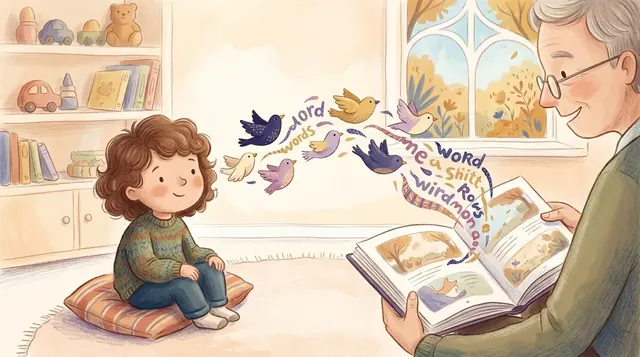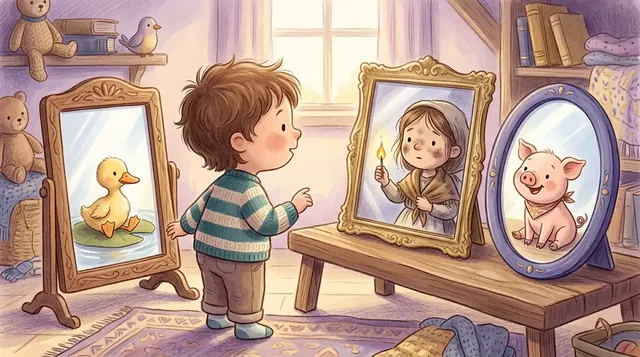
Every parent has tried to teach a value by explaining it and watched the explanation slide off. Children's stories have been solving this problem for two and a half thousand years, and the solution is always the same: do not explain the value, show a character who lacks it and let them pay. This guide compares the three ways a story can carry a moral (stated, buried and lectured), shows which stories on this site do which, and sets out how to talk about the lesson afterwards without turning the bedroom into a pulpit.
Why announced morals fail and earned ones stick
A moral is a rule about consequences: if you lie, people stop believing you; if you hoard, you end up alone. A rule stated in the abstract asks a child to take the consequence on trust. A story makes the child watch the consequence arrive, and watching is a different kind of knowing. When the villagers in The Boy Who Cried Wolf hear the third cry and stay in their houses, a five-year-old feels the boy's panic, and the rule about lying has been installed as a memory rather than a warning. You can test this: ask a child a month later what happened to the boy and they will tell you; ask what you said about honesty last Tuesday and they will not.
There is a second reason. A lecture comes from a parent and therefore invites resistance; a story comes from nowhere in particular and invites agreement. The child is not being told off, they are watching someone else be told off by events, and they get to feel wiser than the boy, the fox or the fisherman's wife. That feeling of being on the right side is the lesson taking hold.
Fables: the moral stated, because the plot has earned it
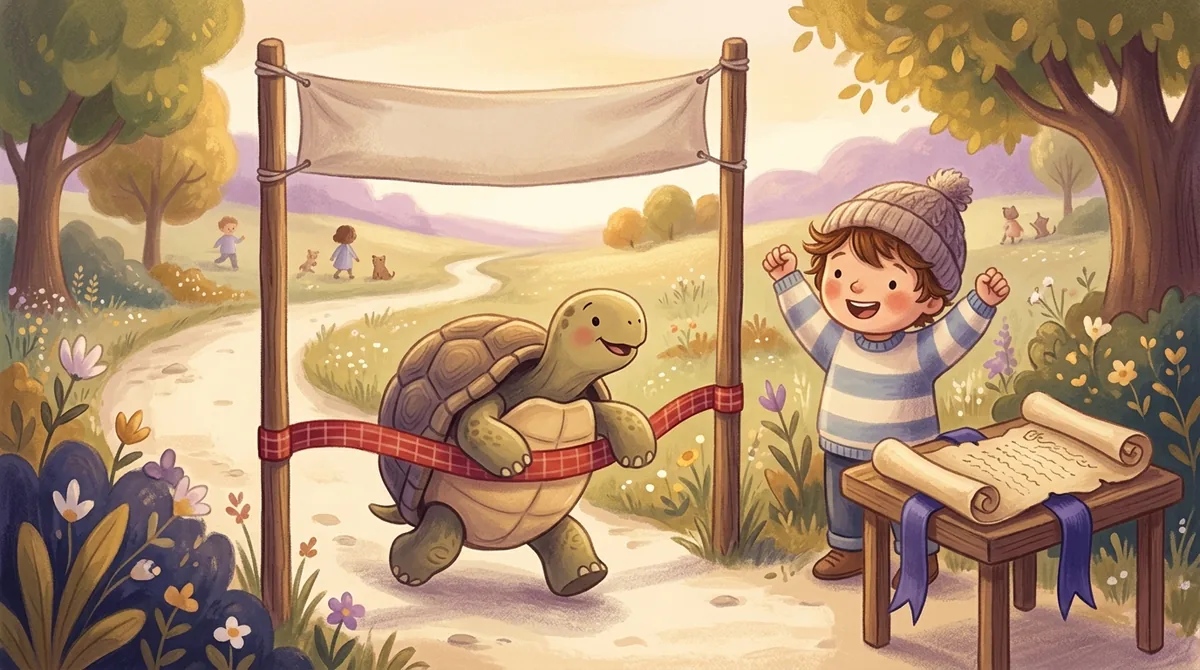
Aesop's fables end with the moral said out loud, and it is tempting to think that contradicts the argument above. It does not, because by the time the line arrives the story has proved it. "Slow and steady wins the race" at the end of The Hare and the Tortoise is not an instruction; it is a summary of something the child has just watched happen, delivered in words short enough to keep. The stated moral gives the child a handle for a lesson they already hold.
Fables work for a second reason: the characters are animals, and animals cannot be the child. A story about a greedy boy risks being about the listener; a story about a greedy dog is safely about the dog, and the child can judge freely. The whole Aesop's fables theme runs on this trick. Some of the most useful, with the lesson each states:
- The Ant and the Grasshopper: prepare before you need to (the responsibility fable, and the one children argue about most).
- The Dog in the Manger: do not begrudge others what you cannot use yourself (a greed fable in under two minutes).
- The Frog and the Ox: do not puff yourself up beyond your size (the pride fable, and the funniest to read aloud).
- The Milkmaid and Her Pail: do not count your chickens; also a fine lesson in daydreaming.
- The Fox and the Grapes: it is easy to despise what you cannot get; the origin of "sour grapes", which older children enjoy learning.
Fairy tales: the moral buried, and dug up by the child
Fairy tales do not state their moral, and the Grimms and Perrault would have thought it odd to ask. Yet children extract morals from them constantly, and usually the right ones. Nobody in The Fisherman and His Wife says the word greed; the wife asks for a cottage, then a castle, then to be king, emperor and pope, and ends back in the hovel. A child of six will tell you afterwards that "she should have stopped at the castle", which is the moral, arrived at independently and therefore owned.
The buried moral has a cost and a benefit. The cost is that a younger child may miss it, or take a different one than you intended; a four-year-old may come out of Rumpelstiltskin thinking the lesson is "learn people's names". The benefit is that the moral is the child's own conclusion, which is stickier than any conclusion handed over. It also means fairy-tale morals can be complicated in a way fables cannot. Rumpelstiltskin is about keeping promises, but the miller's daughter made an impossible promise under duress, and a seven-year-old who notices that is doing real moral reasoning.
The moral line on every story page on this site is there for you, not for the child. Read it to yourself before you begin, so you know what the story is quietly arguing, and decide whether you want to draw it out or leave it buried.
Three ways to talk about the lesson without preaching
- Ask whether it is fair. "Should the ant have shared?" is the best question in the library. Half of children say yes, and they are not wrong: the fable is arguing for foresight, and the child is arguing for mercy, and the two are both values worth having. A moral that survives an argument is one the child will keep.
- Ask what the character should have done instead. This turns a warning into a plan. "What could the boy have done when he was bored?" produces better answers than "so we never lie, do we".
- Let the child find the story's twin in their own week. Do not supply it. If you read Little Red Hen on the night after nobody helped tidy up, say nothing; the child will make the connection in the dark, and it will be theirs. If you say "just like you this afternoon", you have turned the story into the lecture it was supposed to replace.
All three fit inside the "Talk about it" section at the end of each story, and none of them needs more than a minute.
Matching the moral to the child and the week
Morals land hardest when they are close to something the child has just lived. Keep a short list in your head:
| The week's trouble | The story | What it argues |
|---|---|---|
| A lie that unravelled | The Boy Who Cried Wolf | Trust is spent by lying and cannot be bought back quickly |
| Nobody would help | Little Red Hen | Those who do the work get the bread |
| Wanting more, and more | The Golden Touch of King Midas | Getting everything you asked for can be the worst outcome |
| Showing off | The Emperor's New Clothes | Vanity makes fools of the powerful, and a child can see it |
| A promise broken | The Frog Prince | A promise made in a hurry is still a promise |
Do not do this every night. A child who suspects every story is chosen to correct them will stop listening to all of them. Two nights a week of "pointed" stories and five of whatever they want is about right.
What not to do
Three habits that undo the work. Do not add a moral the story does not have. Children notice the join, and a tacked-on lesson makes them distrust the story. Do not moralise during the story. Interrupting the fox mid-trick to say "that's not very nice, is it" stops the child from feeling the trick, which is what teaches them. Save it for the end. Do not require agreement. A child who says the hare should have won is testing whether the moral is a rule or a conversation; treat it as a conversation and they will come to the rule on their own.
And one thing not to worry about: morals that seem old-fashioned. The hard-work and responsibility stories can look like Victorian scolding on the page, but children hear them as stories about fairness, which is the value they care about most at every age.
Where to start
Read a stated-moral fable and a buried-moral fairy tale in the same week and notice the difference in what your child says afterwards. The Hare and the Tortoise and The Fisherman and His Wife are a good pair. Ask "was that fair?" after each and do not answer your own question. For the wider picture of what a story does for a child beyond its lesson, see the benefits of bedtime stories.