The right bedtime story at six months is a rhyme said into the top of a head. At two it is the same four-minute farmyard tale for the thirtieth night running. At four it is a wolf who is beaten. At seven it is a giant, a beanstalk and a boy who is cleverer than he looks. At ten it is a snow queen, a match girl and an ending that leaves a question in the room. Every one of those is a bedtime story, and none of them is interchangeable. This page walks the whole run from birth to twelve, says what a child at each stage is listening for, names the stories on this site that fit, and links to a fuller guide for each age.
Why the age matters more than the title
Parents tend to pick stories by title, because titles are what we remember from our own childhoods. But Little Red Riding Hood is not one story. It is a two-minute rhyme with a wolf who says "all the better to see you with", a gentle retelling where the woodcutter arrives in good time, and a fuller tale where a grandmother is swallowed and cut free. The same title suits a two-year-old, a four-year-old and a seven-year-old only because the version changes. This site holds a gentler Little Red Riding Hood and the fuller classic as separate stories for exactly that reason, and the age labels and read-aloud minutes on every story page are there so that you can tell them apart at nine o'clock without reading ahead.
One of the pleasures of reading across the whole run is that the same tales return, changed. A child meets the wolf first as a rhyme at two, then as a beaten villain at four, then at seven in a version where the danger is real and the escape is earned, and each time the tale is doing a different job: rhythm, then courage, then plot. The Ugly Duckling is a sad bird who finds his family at four; at ten it is a story about the difference between where you were born and what you are, and Andersen's line that it does not matter about being born in a duckyard as long as you are hatched from a swan's egg lands differently on a child who has just started secondary school. Do not retire a story because it has been read; move it up a version instead.
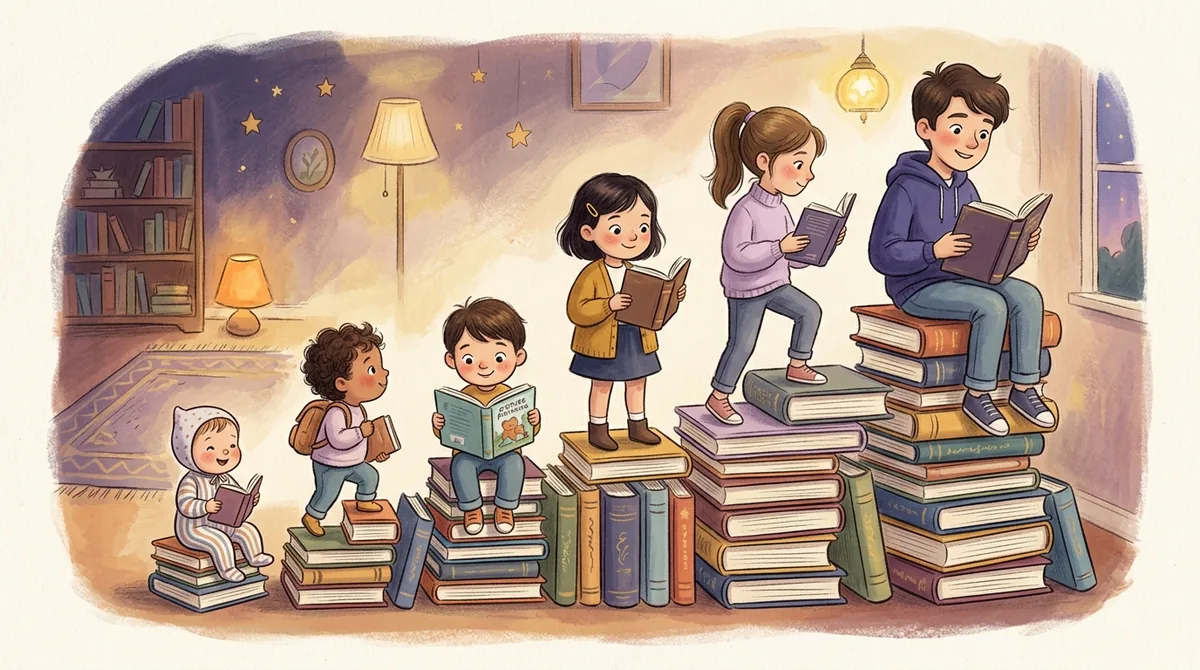
What changes across the years is not taste but capacity. A baby can hold a rhythm. A toddler can hold one character and one repeated event. A preschooler can hold a hero, a problem and an ending. A five-to-eight-year-old can hold two characters with different motives and a plot that turns in the middle. A tween can hold ambiguity: a hero who is partly wrong, an ending that costs something. Pitch a story above that capacity and the child wriggles; pitch it below and they are bored, which at bedtime looks the same. The age hubs on this site sort the whole library by that capacity, and the sections below say what to expect in each.
Birth to one: voice, rhythm and closeness
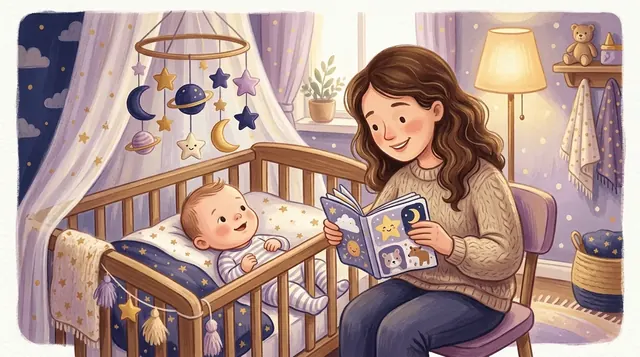
A baby is not listening to the story. A baby is listening to you. The words matter far less than the pitch, the rise and fall, the pause and the warmth of the person saying them, which is why a nursery rhyme with no plot at all does more for a four-month-old than a picture book with a careful one. The National Literacy Trust and BookTrust both encourage reading from birth, and the American Academy of Pediatrics has recommended since 2014 that paediatricians advise parents to read aloud from infancy. The reason is not that a baby understands the story; it is that the baby is learning the shape of language and the fact that this voice, at this time of day, means safety.
What to read: anything short with a strong beat. Hey Diddle Diddle, Little Red Hen pairs a rhyme with a very short farmyard tale and can be said rather than read. The Little Good Mouse and The Butterfly are rhyming stories that work as lullabies. Repetition is the point, so choose three and keep them. The full account is in the guide to bedtime stories for babies.
One to three: the same short story, every night, on purpose
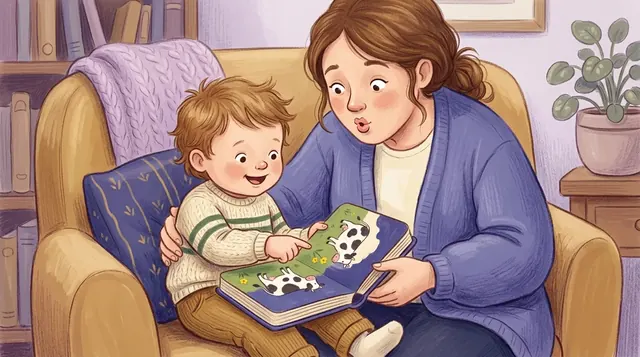
Somewhere in the second year the baby who listened to your voice becomes a toddler who listens for the bit where the goat goes trip-trap. This is the age of repetition, and it is worth saying plainly that a toddler asking for the same story for the twentieth night is not stuck; they are learning. Each hearing lets them predict the next line, then say it with you, then correct you when you get it wrong, and that progression from listening to predicting to producing is how language is built.
The rules for toddler stories are short: under five minutes, a strong rhythm, familiar animals, a gentle surprise and no real peril. The Three Billy Goats Gruff is the model, because the troll is loud but the goats always win and the "trip-trap" invites the child in. The Enormous Turnip has a chain of helpers to count and a pull to join in with. The Gingerbread Man has a chorus every toddler learns by the third night. Goldilocks and the Three Bears has three of everything, which is a toddler's favourite number. Every one of these is in the five-minute stories section and the toddler hub. The toddler guide covers how to survive the month of one story and when to introduce a fourth.
Three to five: a hero, a problem and a happy ending
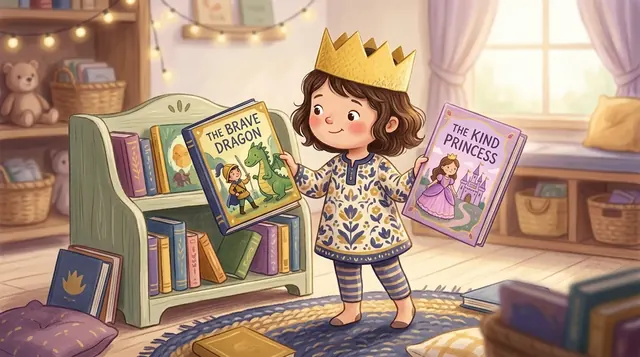
Preschoolers are ready for the thing we usually mean by a story: someone to root for, something that goes wrong, and an ending that puts it right. They are also ready, for the first time, to be a little frightened on purpose, which is why the classic fairy tales in their kindest versions arrive now. A wolf that is defeated teaches a four-year-old that a fear can be got through; a wolf that eats a grandmother and is not stopped teaches nothing useful at this age, so the version matters and the guide to fairy tales and fear is worth reading alongside this one.
Three kinds of story suit this age. First, the gentle classics: The Elves and the Shoemaker, The Princess and the Pea, The Musicians of Bremen, The Ugly Duckling. Second, first fables, which are two minutes long and end with a line a child can carry: The Lion and the Mouse and The Hare and the Tortoise are the ones to begin with. Third, stories about feelings, because a preschooler has all of them and names for few, and The Velveteen Rabbit and Goldilocks and the FOUR Bears! give them words. The preschool guide has a longer list and a section on the questions this age asks.
Five to eight: longer tales, cleverer heroes, morals worth arguing about
Between five and eight two things happen at once. The child starts to read, haltingly, and the child becomes able to follow a plot that turns in the middle. The second matters more at bedtime than the first. A seven-year-old can hold in their head that the miller lied, that the girl cannot spin straw, that the little man wants the baby, and that the name is the way out, and they enjoy the holding. This is the age of the fuller fairy tales: Rumpelstiltskin, Jack and the Beanstalk, Hansel and Gretel, Puss in Boots, The Tinderbox.
It is also the age when a moral becomes something to argue with rather than accept. The Boy Who Cried Wolf is a very different story to a six-year-old, who wants to know whether the villagers should have come the third time anyway, than to a three-year-old, who just does not want the sheep eaten. Ten minutes is the natural length now, and the ten-minute stories section is where most of these live. The guide for five-to-eight-year-olds gives a week of stories and a way of letting a new reader take the first page without the story stalling.
Eight to twelve: language, ambiguity and the long story
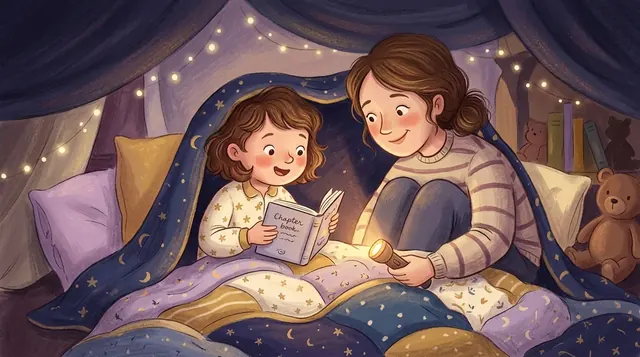
The tween years are when many families stop, and it is almost always a mistake. A ten-year-old who can read a novel alone still cannot read one aloud to themselves in a parent's voice with a parent beside them, and that, not decoding, is what the bedtime story has been for all along. What changes is the material. Tweens want language that is doing something, characters who are not simply good or bad, and endings that are not entirely tidy. Andersen wrote for them without knowing it: The Snow Queen is a proper quest with a girl who saves a boy, The Little Mermaid ends in a way no film has dared, and The Fir Tree is about wanting to be somewhere other than where you are, which is the tween condition exactly.
Wilde's The Happy Prince and The Selfish Giant, MacDonald's The Light Princess, the Norwegian East of the Sun and West of the Moon and a bedtime retelling of A Midsummer Night's Dream all reward a listener who can hold two ideas at once. These are long stories, split into chapters by the story-book reader so that a fifteen-minute tale can run over two nights. The tween guide makes the case in full, and the guide to when children stop wanting stories says what to change when a nine-year-old announces they are too old.
The whole run at a glance
| Age | Length | What they are listening for | Start with |
|---|---|---|---|
| 0–1 | A rhyme, one or two minutes | Your voice, a beat, closeness | Hey Diddle Diddle, Little Red Hen |
| 1–3 | Under five minutes | Repetition, animals, a chorus to join | The Three Billy Goats Gruff |
| 3–5 | Five to ten minutes | A hero, a problem, a happy ending | The Elves and the Shoemaker |
| 5–8 | About ten minutes | A plot with a middle, a proper villain | Rumpelstiltskin |
| 8–12 | Fifteen minutes or a chapter | Language, ambiguity, a cost | The Snow Queen |
How to tell you have pitched it wrong
The signs are the same at every age, and none of them means the child has gone off stories.
- Wriggling and wandering before the middle. Usually the story is too long or too old for them tonight. Stop at a natural pause, say "we'll find out tomorrow", and pick something shorter the next night. Do not push through; a story that ends in a battle teaches the child that bedtime stories end in battles.
- Silence at the wrong moments. A preschooler who goes quiet and still when the witch appears is frightened, not gripped. Lower your voice, say what happens to the witch before it happens ("and she gets tricked, you watch"), and choose a gentler version next time.
- Requests for a different story mid-way. At two this is normal and means nothing. At six it means the story is too young, and it is time to move up an age hub.
- Answering the discussion questions with one word. Every story page has a "Talk about it" section with three to five questions. If a seven-year-old gives one-word answers to a story that a four-year-old would relish, the story is beneath them, and the fix is a longer, cleverer one, not a lecture on effort.
- "I'm too old for this." Said at nine, this means the stories stopped growing at six. It is a request for better material, not for no material.
In every case the answer is the version, not the title. The classic tales section shows the age band on every card, so you can see which version of a tale you have before you open it.
Where to start tonight
- Go to the age hubs and open the one that matches your child. If they sit between two, choose the younger tonight; a story that is slightly easy settles better than one that is slightly hard.
- Check the read-aloud minutes on the story card against the time you actually have. Five minutes for a toddler, ten for anyone under eight, and for a tween pick a chapter, not a whole long story.
- If you cannot decide, tonight's story is picked once a day and shows its age band; it is the right answer more often than browsing at nine o'clock.
- Read the age guide for your child this week, not tonight: babies, toddlers, preschoolers, five to eight or tweens.