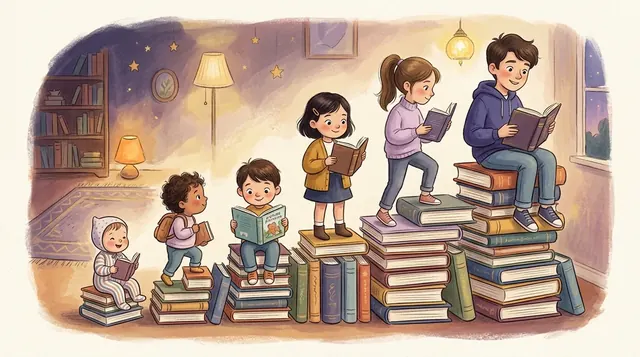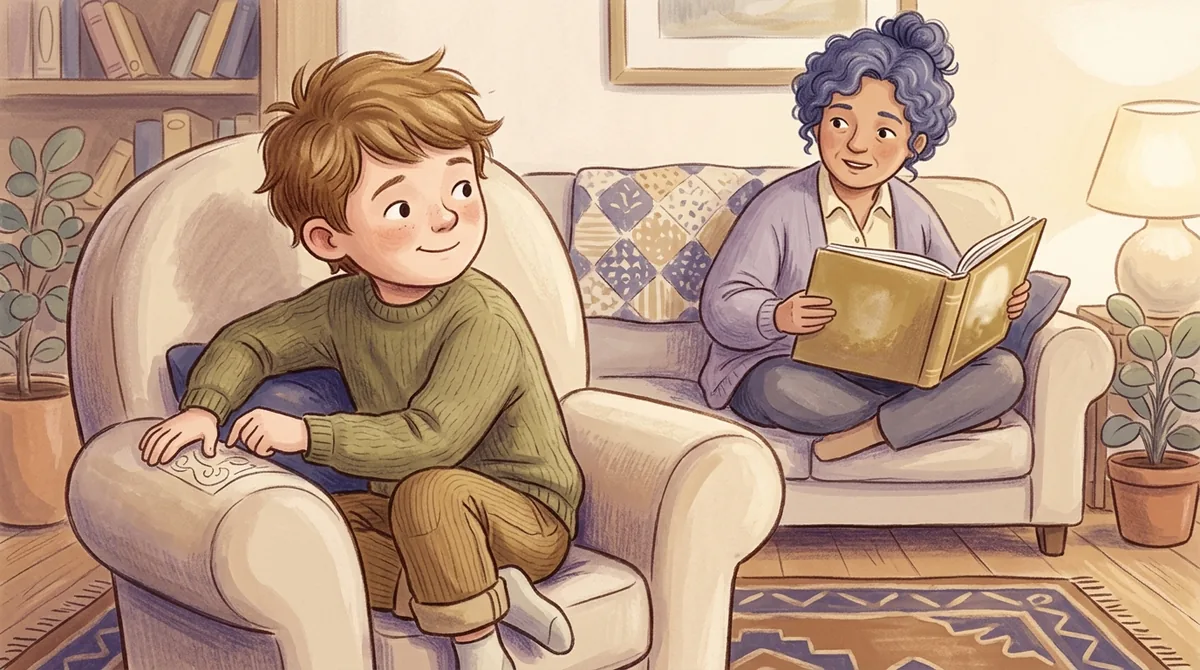
Most children stop wanting bedtime stories somewhere between eight and eleven, and most of them stop for the same reason: the stories stopped growing at six while the child kept going. The ritual itself is rarely what they are rejecting. Change the material, the reader or the format and the great majority come back, sometimes the same night. This guide works through the four usual reasons a child drifts, the three switches that reverse it, and what to do in the rarer case where a child really has finished with stories for now.
First, notice what "stopped" actually looks like
It is seldom an announcement. More often it is a slow thing: the child reads on their own a bit longer and the story gets skipped; a parent works late two nights running and nobody restarts it; a new sibling takes the story slot and the older child gets "you can listen too", which is not the same as being read to. By the time a nine-year-old says "I don't need a story", the story has usually been missing for weeks. That matters because it means the fix is often just to restart, with better material, rather than to persuade. The overview of stories by age shows how far the material should have moved between six and nine, and it is usually further than it did.
The four reasons children drift, and the fix for each
1. The material stopped growing
This is the big one. A child who was read The Three Billy Goats Gruff at three and The Elves and the Shoemaker at five is still, at nine, being offered the same shelf, and is bored. The fix is the big kids hub: longer tales, richer language and endings that are not entirely tidy. Do not ease them in. Go straight to The Snow Queen, which is a proper quest across seven parts, or The Happy Prince, which will make them cry and ask for it again. A nine-year-old who says they are too old for stories is rarely too old for a story about a statue that gives away its eyes.
2. A younger sibling took the slot
When a second child arrives, the bedtime story tends to migrate to the younger one's level and the older one is invited to sit in. Nobody enjoys sitting in. The fix is two stories: the little one's first, short, and then ten minutes for the older child alone, in their own room or after the small one is asleep, with material pitched at them. It costs ten minutes and it is the ten minutes the older child has been missing. The tween guide has the list of tales to reach for.
3. Bedtime drifted late
Older children go to bed later, and the story often falls off the end of an evening that has been squeezed by homework, clubs and a screen. The story then reads as the thing that is making bedtime later still, and the child resists it for that reason. The fix is to move the story earlier rather than drop it: it can happen on the sofa at eight before teeth, not in bed at nine. A story is still a story if the child is in pyjamas on the landing.
4. They want to look older
Somewhere around ten, being read to starts to feel babyish, particularly if a friend has said so. This one needs a change of framing more than a change of story. Call it "a chapter", not "a story". Read something that could not be mistaken for a picture book: A Midsummer Night's Dream retold, The Little Mermaid in its unfilmed ending, Pandora's Box. Let it be known that this is what older children get, and that the younger sibling is not allowed to listen yet.
The three switches
If the reason is not obvious, try the three switches in order. Each one changes something about the ritual without dropping it.
- Change the material. Move up a hub. Pick a long story and read only a chapter. Choose something with a death, a betrayal or an unfair ending, because a tween trusts a story that admits the world is not always put right. The long stories page lists every tale of chapter length on the site, and the story-book mode splits them at natural breaks.
- Change who reads. The other parent, a grandparent on a video call, an older sibling, or the child themselves reading to a younger one. A ten-year-old who will not be read to by mum will often be read to by grandad, or will read The Lion and the Mouse to a four-year-old with enormous seriousness, and either keeps the habit alive. Reading to a younger sibling is particularly good for this age: it gives them the ritual with the status the other way round.
- Change the format. Use the Listen button and lie beside them in the dark with the screen turned to the wall, so that the story is heard rather than read. Some children who reject being read to will accept a story being played, and a parent who stays in the room is still giving them the thing that mattered. The guide to audio stories and read-aloud voices covers how to do this without it becoming screen time, and the rule that the parent stays.
Try one switch a week rather than all three at once, so that you can tell which one worked. Most children come back on the first or second, and the one that brought them back tells you something about why they left.
What to say when they refuse
Not "you used to love stories", which is a guilt trip and a child can hear it. Not "just one, for me", which makes the story a favour. Something more like: "I've found one that's older. It's got a robber girl in it and it takes three nights. I'm going to read it whether you listen or not." Then read it, in the room, at a normal pace, without checking whether they are listening. A great many children who refuse a story will listen to one that is being read anyway, and will ask what happens next the following night. If they put headphones on, keep reading; if they leave the room, read tomorrow. The test is not tonight.
If they really have stopped
Some children do finish with stories for a time, usually around eleven or twelve, and it is not a failure. It is also not usually permanent, and a parent who treats it as the end of something tends to make it so; treat it instead as a pause in the material while the rest of the ritual carries on. What they still need is the ten minutes. Keep the slot and change what fills it: sit on the end of the bed and read your own book while they read theirs; ask one question about the day and wait for the answer; or do nothing but be there with the light low. The bedtime story was always two things, a story and a parent, and the parent is the part that does not stop. Children who have had the ten minutes through the primary years often ask for a story again at twelve or thirteen, out of nowhere, on a bad night. Have The Selfish Giant ready; it is short, and it is about a wall coming down.
Where to start tonight
If your child has drifted, pick one thing from this list and do it tonight without discussion.
- Read the first chapter of The Snow Queen in story-book mode and stop at the break.
- Read The Happy Prince in one sitting; it is fifteen minutes and it works on almost everyone over eight.
- Hand the phone to the child, open The Lion and the Mouse, and ask them to read it to their younger brother or sister.
- Browse the big kids hub with them in the daytime and let them choose three for the week.