You read to a baby for the same reason you talk to one: not because they understand, but because understanding is built out of being talked to. A baby cannot follow a plot, does not know what a wolf is and will chew the corner of anything you hold within reach. What a baby can do, from the first weeks, is hear the tune of your voice rise and fall, feel the beat of a rhyme through your chest, and learn that this sound, at this time, with this person, means the day is ending safely. That is the whole of the bedtime story at this age, and it is enough.
What a baby actually gets from a story
Three things, in this order of importance.
Your voice. Babies prefer the voices they heard before birth and turn towards them within days. A story read aloud gives a baby minutes of that voice at its most musical, because we read with more rise and fall than we speak. The NHS advises talking to babies from birth and says that it does not matter what you say; a rhyme is simply talk with a shape.
Rhythm. A nursery rhyme has a beat the way a heartbeat does, and babies settle to beats. This is why the oldest rhymes are the ones that survived: "Hey diddle diddle, the cat and the fiddle" has a rocking rhythm you can feel without knowing a single word, and parents have been saying it over cots for at least two hundred and fifty years. The nursery rhymes section gathers the ones on this site.
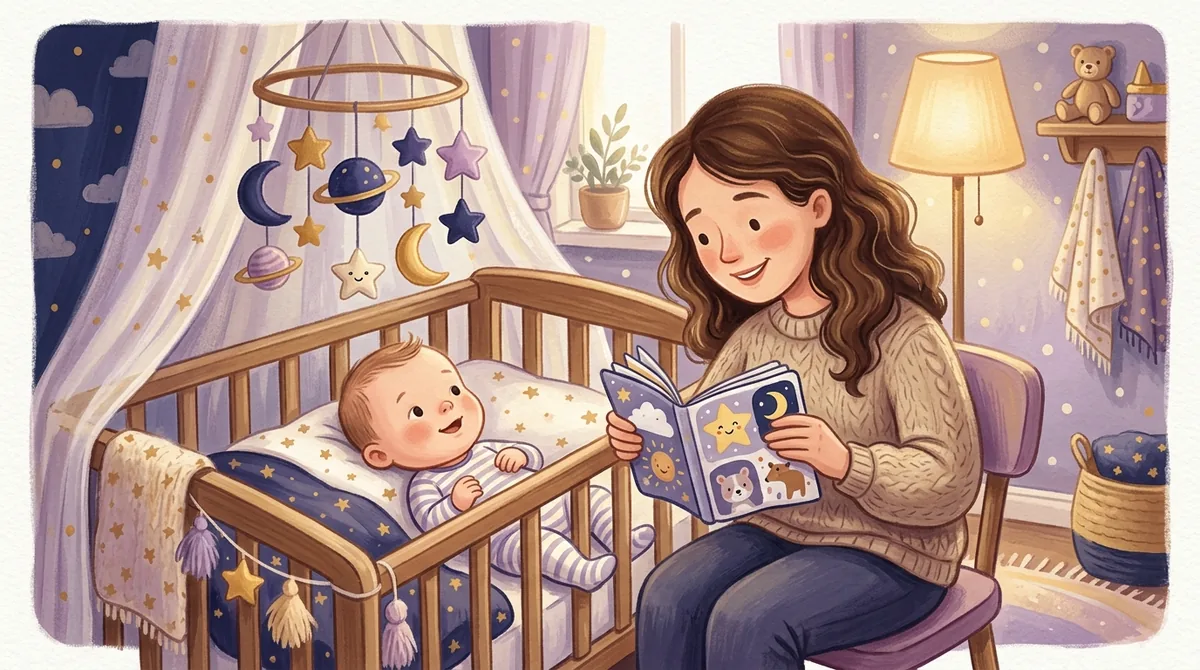
Closeness. A story is read with the baby held or lying beside you, in a dim room, with nothing else happening. That combination, repeated every night, is what the sleep advice from the American Academy of Pediatrics means by a consistent bedtime routine, and a baby learns it long before they learn a word.
Notice that "the plot" does not appear on that list. The baby guide differs from every other guide in this cluster in one respect: for the first year, the words you read matter less than the way you read them. The overview of stories by age maps how that reverses over the next decade.
Birth to three months: say it, do not read it
In the first weeks a bedtime story is a rhyme said into the top of a head during the last feed or the last cuddle. Do not hold a book or a phone; hold the baby. Pick two rhymes and say them the same way every night, slowing down and dropping your voice on the last line. A baby this age settles to the sound, and you will find within a fortnight that the rhyme itself starts to bring the eyelids down, which is the beginning of a sleep cue that will still work at five.
The rhymes to use are the ones you already know. If you do not know any, Hey Diddle Diddle, Little Red Hen pairs the old rhyme with a farmyard tale short enough to learn in an evening, and the Listen button on the page will read it to you while you get the rhythm. You are not learning it for the baby; you are learning it so that you can say it in the dark with your eyes closed.
Three to six months: a book is now a thing to look at
Around three months the baby starts to focus at book distance and to be interested in faces and high-contrast shapes. This is when a board book earns its place: not for the story but for the pictures, the turning and the fact that the baby now has something to look at while you talk. Sit them on your lap facing outwards, hold the book where they can see it, and say the rhyme or read the page. Do not worry about finishing; a baby who pulls the book towards their mouth is engaging with it in the only way they have.
Keep the sound the same as before. The rhyme you said at two weeks is now the rhyme you read at four months, and the sameness is doing work: recognition arrives before understanding, and a baby who brightens at the first line of a known rhyme is showing you the first step of language.
Six to twelve months: the baby starts to join in
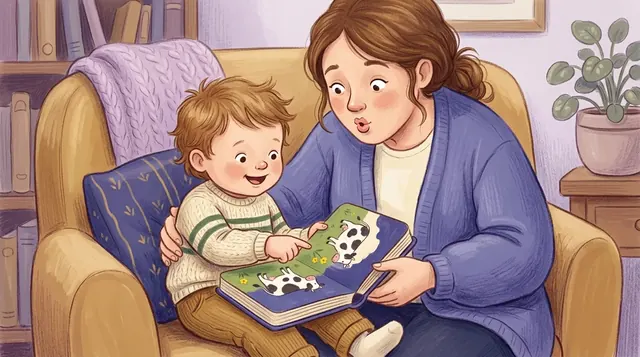
From about six months a baby will babble in the gaps, bang the page, and lean towards the book when you pick it up. By nine or ten months many will point, and by the first birthday some will make an animal noise on cue. This is the age to add a very short story to the rhymes, provided it has the qualities of a rhyme: a repeated line, animals, and a beat. The Little Good Mouse and The Butterfly are rhyming stories with a lullaby pace. The Stars in the Sky is a rhyming story about a child who wants the stars, and it slows at the end the way a lullaby does. The Enormous Turnip has a "pulled and pulled" refrain a ten-month-old will rock to. Goldilocks and the Three Bears has three voices for you to try and three bowls to point at.
Pause where the baby usually babbles and wait for them. That pause is a conversation, and research on early language consistently finds that the back-and-forth matters more than the number of words. Reading with a baby is one of the easiest ways to get that back-and-forth, because the book gives you both something to be about.
How long, how often, and what if they cry
- Length: two minutes is plenty until six months; five by the first birthday. The baby sets the length, and a baby who arches away or cries is done.
- Frequency: every night, same place in the routine, ideally after the feed and before the cot. Consistency is the entire method; there is no content that beats it.
- Repetition: three rhymes or stories for weeks. You will be bored well before the baby is, and the guide to how stories build language explains why the twentieth hearing is still doing more than a new one would.
- Crying: a baby who cries when you start is not rejecting the story, they are tired, hungry or overstimulated, and the fix is the routine, not the book. Stop, settle, and say the rhyme once they are calm, or skip it tonight.
- Screens: not for babies. The baby cannot get closeness from a screen, and a video of a rhyme lacks the one ingredient that matters, which is you. If you are too tired to read, say a rhyme with the lights off.
Reading to a baby when you are the only one awake
Most reading to babies happens when the reader is exhausted, and it is worth having a plan for that. Say, do not read. Keep the rhymes short and few. Use the site's Listen button on a story page, with the screen turned to the wall and the night-light mode on, if you cannot hold the words together yourself; the baby still gets the closeness if you are lying beside them. Do not aim for a good performance; aim for the same sound every night. The dads' and mums' voices a child remembers from being read to are not the ones that did the voices well but the ones that were there.
Where this leads
By twelve months the baby who was soothed by a rhyme is a toddler who reaches for the book, turns the pages the wrong way, and says "gain" at the end of The Enormous Turnip. That is the moment the story becomes a story rather than a sound, and it is covered in the toddler guide and the toddler stories hub, where every tale reads aloud in under five minutes. Until then, the whole of the job is a warm voice, a beat, and the same thing every night.
Tonight
If the baby is under six months, say Hey Diddle Diddle with the lights off, slowing on the last line. If they are older, sit them on your lap with The Enormous Turnip or The Little Good Mouse and wait for the babble. Tomorrow, the same.