

Classic Tales · A retelling of an Aesop fable
The Boy Who Cried Wolf
A mischievous boy guarding his flock enjoys tricking villagers with false cries of "Wolf!". They rush to help, only to find no danger. But when a real wolf appears, the boy's desperate shouts are met with disbelief. This classic tale explores the importance of honesty and trust.

The Boy's Village Home
This story began in a quiet village, surrounded by tall green trees and gentle, rolling land. Young Pip lived there, a boy known for his clever ideas. He often grinned, thinking, "I wonder what new adventure I can find today?"
Pip lived at the very edge of the village. From his window, he watched the green grass dance and sway in the wind. The big blue sky stretched wide above everything, making him feel tiny and full of wonder.
The Boy's Deception
The First Cry for Help
One bright afternoon, Pip watched his sheep eating grass, and a clever trick popped into his head. He grinned, then raced to the village, shouting, "Wolf! Wolf! The wolf is attacking my flock!" Villagers dropped their work, their tools clattering as they grabbed sticks and stones. "Quick, let's help Pip!" shouted Farmer Giles, but the sheep were munching quietly.
Pip giggled, clapping his hands and shouting, "Got you!" He laughed loudly at their puzzled faces. "Oh, Pip," sighed old Mrs. Higgins, shaking her head. "You gave us a fright for nothing." They mumbled crossly as they walked back home, their heavy sticks dragging on the path.
The Second Cry for Help
Not much later, Pip thought of another funny trick. He took a huge breath and cried out, "Wolf! Please help! The wolf is back!"
The villagers stopped their busy chores. Farmer Giles let out a long, slow sigh. "Is he telling us the truth this time?" asked Mrs. Higgins. They slowly walked up the dusty path to the hill. There was no wolf, just Pip, laughing with a big, wide grin. "Fooled you twice!" he chuckled, running off quickly. A little cloud of dust puffed up where he had been. The villagers all shook their heads sadly.
The Consequences of Deception
Pip’s fun with tricks soon felt different. One afternoon, a real grey wolf stepped out from the dark trees. Its yellow eyes watched the fluffy sheep. It took a quiet step closer to the flock. Pip’s heart thumped very fast inside his chest. He cried out, "Wolf! Help! Please! The wolf is really here!" His voice echoed across the empty fields. Nobody came running from the village. Farmer Giles heard the shout while mending his fence. "That Pip again," he grumbled, shaking his head slowly.
Pip stood all by himself, watching the big wolf chase his sheep far away. The sun started to go down, making the sky a deep orange. Pip felt a cold, empty feeling in his tummy.
The Moral of the Story
The Importance of Trust
In the village, people always lent a hand. If someone called for help, neighbours would run to their side. They trusted each other with everything. But Pip's shouts about the wolf had changed things. Now, when a voice cried out, people just shook their heads.
The old village elder stood near the village gate, watching Pip walk away. "Trust is like a little seed," she said softly. "You must be truthful to make it grow strong. If you tell lies, the seed will just fade away." Pip did not realise how much he had hurt everyone. He just shuffled his feet in the dust.
The Consequences of Actions
Pip's cries for help, which were not true, caused trouble for everyone. First, the villagers ran fast to him. They worried about what might be wrong. "Where is the wolf?" they called out to Pip. But there was no wolf anywhere. People looked cross, "It was a silly trick!" they grumbled. They shook their heads and went back to their homes.
Then, a real grey wolf crept close to the sheep. Pip yelled loudly, "Wolf! It's real this time!" But the people did not move from their places. "He is only playing games again," someone said. Another person muttered, "Why bother helping him?"
The Value of Honesty
"Wolf!" Pip yelled, his voice cracking. He watched the grey wolf creep closer to the frightened sheep. He looked towards the village, hoping someone would finally come running. But the path stayed empty and quiet.
If Pip had only spoken truthfully from the beginning, the villagers would be here now. They would carry their sturdy sticks, ready to chase the big wolf far away. His dishonesty cost him their trust and left his sheep in danger.
The Power of Regret
Pip sat very still on the dry ground. His shoulders felt heavy, much heavier than any wool from his sheep. He watched the scattered flock of sheep. A tiny lamb shivered, making him feel a big ache in his tummy. "Oh, Pip," he whispered, "this is all my fault."
He looked at the empty path towards the village. No one was coming. He suddenly understood: his pretend wolf calls had made people stop trusting him. If he had always told the truth, they would be here now. "I will always tell the truth from now on," he promised himself, a serious thought in his head. He knew that telling the truth was more important than anything.
About this story
This retelling of a well-known fable from our Classic Tales collection is a good choice for an evening when you want a quick, thought-provoking story. It suits children Ages 4–8 and offers a gentle adventure that highlights the importance of honesty. While the boy's predicament with the wolf can be a little tense, the story settles into a clear lesson about trust, leaving a child contemplative rather than over-excited.
Read this next
-
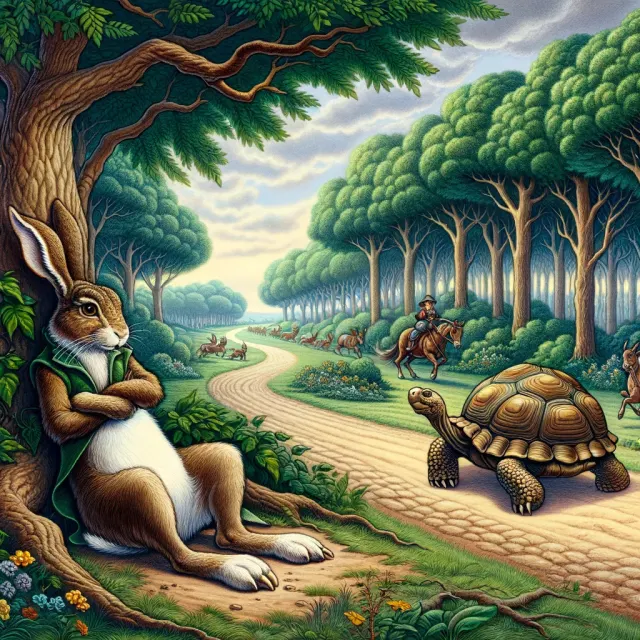 The Hare and the Tortoise 6 min · Ages 3–7This classic fable also teaches a clear lesson, but with a calmer pace, focusing on the rewards of steady effort rather than honesty.
-
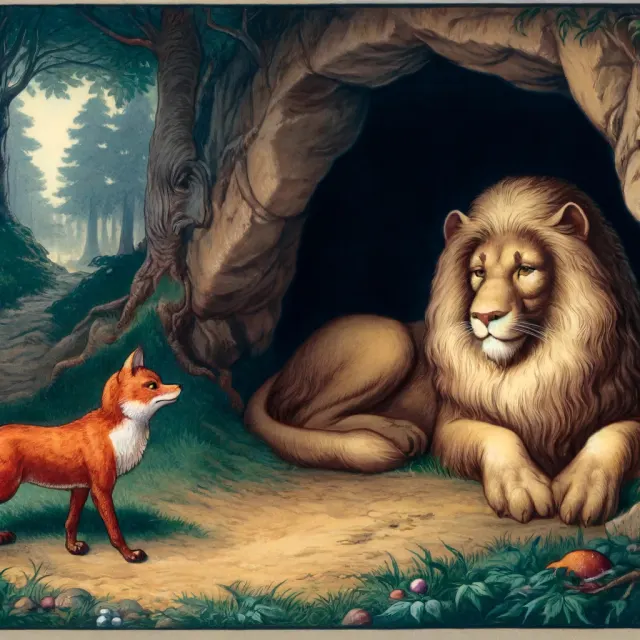 The Old Lion and the Fox 9 min · Ages 4–8For another traditional fable exploring character flaws, this story offers a different perspective on wisdom and the pitfalls of pride.
Talk about it
Always tell the truth, because if you don't, people might not believe you when it truly matters.
Questions to ask
- What did Pip shout to trick the villagers?
- How did the villagers feel when Pip tricked them?
- What happened to Pip's sheep when the real wolf appeared?
- How do you think Pip felt when no one came to help him?
- Why is it important to always tell the truth?
Words to know
- clattering
- Making a loud, sharp noise, like things falling or hitting together.
- puzzled
- Confused or not understanding something.
- sighed
- Let out a long breath to show you are tired or sad.
- mumbled
- Spoke quietly and unclearly, so it was hard to hear.
- grumbled
- Complained in a low, unhappy voice.
More stories like this
 8 min
Ages 5–8 · Classic Tales
The Lion and the Fox
8 min
Ages 5–8 · Classic Tales
The Lion and the Fox
In the sunny Pride Lands, a mighty Lion rules with courage. A cunning Fox, known for his quick wit, challenges the Lion…
 10 min
Ages 6–10 · Rhyming Stories & Poems
Mudjee Monedo
10 min
Ages 6–10 · Rhyming Stories & Poems
Mudjee Monedo
Mudjee Monedo loves exploring the Enchanted Forest. One day, he discovers an ancient tree that reveals a secret: a…
 10 min
Ages 5–8 · Classic Tales
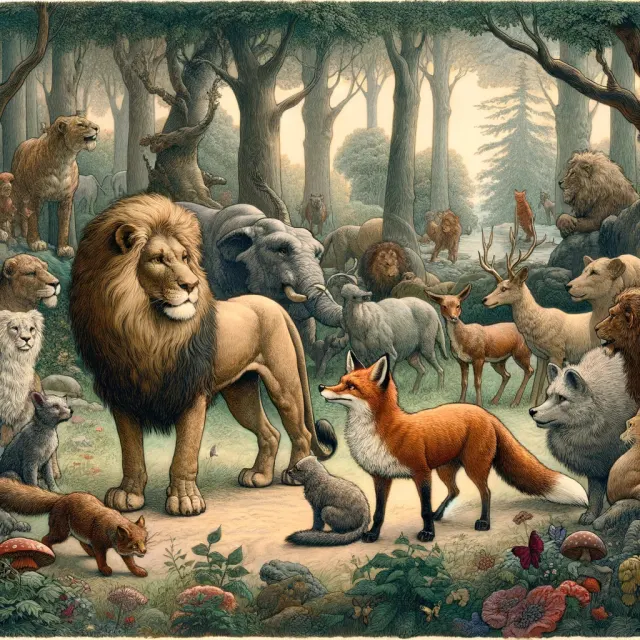
The Lion, the Fox, and the Beasts
10 min
Ages 5–8 · Classic Tales
The Lion, the Fox, and the Beasts
The lonely Lion, king of the forest, longs for a friend. He meets the cunning Fox, who also seeks true companionship…
9 min
Ages 4–8 · Classic Tales
The Old Lion and the Fox
In a lush jungle, an old, proud lion rules, admired by all but a clever fox. The fox, seeing the lion's arrogance as a…
6 min
Ages 3–7 · Classic Tales
The Hare and the Tortoise
The confident Hare loves to boast about his speed, often teasing the slow and steady Tortoise. Challenging Tortoise to…
 6 min
Ages 4–8 · Classic Tales
The Monkey and the Camel
6 min
Ages 4–8 · Classic Tales
The Monkey and the Camel
Momo the mischievous monkey plays a trick on patient Caramel the camel, leading Caramel to fall into a dry well. This…