An audio story is a real bedtime story, provided a parent is in the room and the screen is dark. It is not as good as you reading, because your voice is the part a child values most and because a device cannot pause when the child looks worried. But it is far better than no story, and on some nights, in the car, when you have lost your voice, when a parent is away, when a child is old enough to want the story after you have gone, it is the right first choice. This guide covers where audio fits, the three rules that make it work, how to set up the site's read-aloud voice properly, and how to keep the listening a shared thing rather than a substitute for you.
Where audio fits, honestly
Rank the options for a bedtime story and it goes: a parent reading aloud from the page; a parent telling a story from memory; a parent lying beside the child while a recorded or synthesised voice reads; a child listening alone to a story with the door open; nothing. The gap between the first two and the third is real but smaller than parents fear. The gap between the third and the fourth is bigger than it looks. And the gap between the fourth and nothing is enormous, because a story played at the same time every night is still a sleep cue, and a child who falls asleep to a story is still hearing more good language than one who does not.
So use audio without guilt, but use it in the right place on that list. It is the third option, most nights, and the first option on the nights when the alternative is a parent too tired to read kindly; the guide for exhausted parents has the whole ladder.
The three rules
Stay in the room
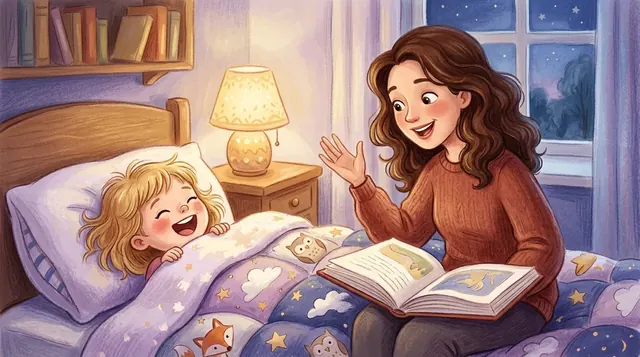
A read-aloud voice with a parent lying beside the child keeps nearly everything that matters about a bedtime story: the closeness, the shared attention, the sense that this is a thing we do together. A read-aloud voice with the parent in the kitchen keeps only the words. Stay. Lie down if you like. Say the refrains along with the voice. Put your hand on the child's back at the scary bit, which the device cannot know is scary. The voice is doing the reading; you are doing the bedtime.
Keep the screen dark
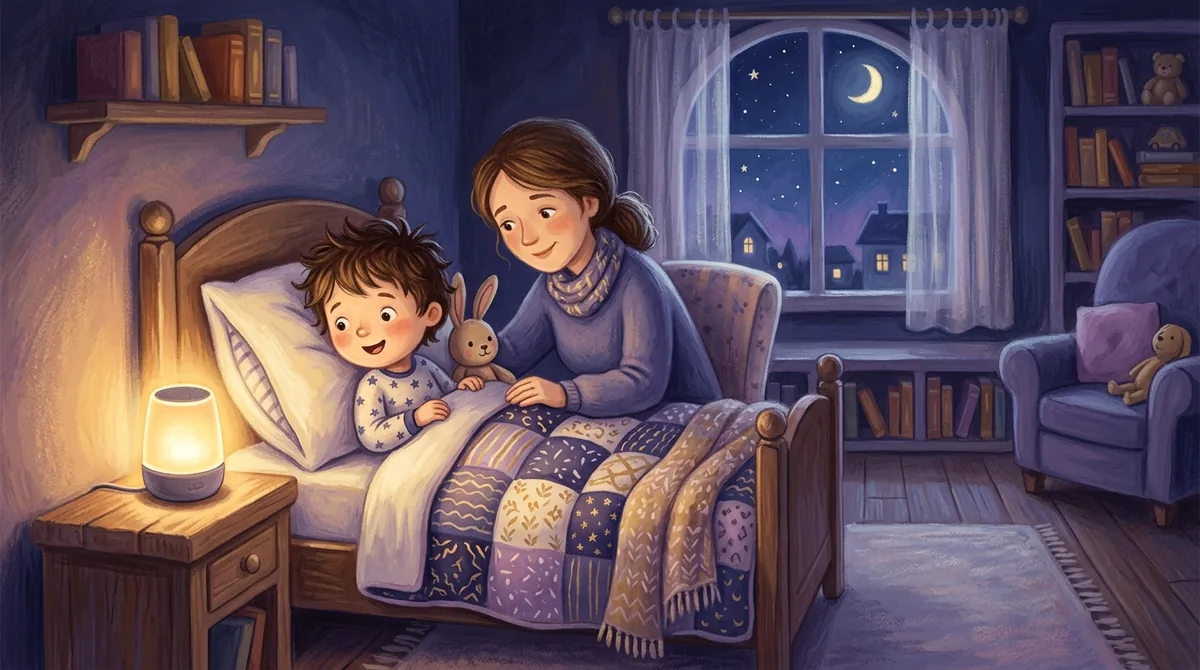
The reason screens before bed are a problem is mostly light and stimulation, not sound. A story listened to with the screen face down, or with the night-light dim mode on and the phone on the far side of the bed, is a screen-free bedtime in every way that matters. A story watched on a bright tablet is not, however gentle the story. The screen-free bedtime guide explains why the light matters; the practical rule here is that the child should not be looking at anything glowing during the last story of the night.
You press play
The adult starts the story, and the adult decides when it stops. This is partly about control of the device (a child who can press play can press play again, and again) and partly about the ritual: the story starting is the signal, and signals are given by the parent. One story. When it ends, the device goes away and your closing words are said. Never a playlist, never autoplay, never "listen until you fall asleep". A story that runs all night stops being a cue and becomes wallpaper.
Setting up the site's read-aloud voice
Every story page on BedtimeStory.kids has a Listen button. It uses your phone or tablet's own text-to-speech voice, so it works offline once the page has loaded and there is nothing to download, and it highlights the paragraph being read so a child who is following along can see where the voice is. Here is how to set it up so it helps sleep rather than fighting it.
- Choose the story before bedtime. Scrolling through the library with a child at nine o'clock is a bright screen and a negotiation. Pick it earlier, or use tonight's story, which chooses one for you.
- Check the length. Every story shows its read-aloud minutes at the top. For a bedtime listen, five to ten minutes. The long stories are for the car or a chapter a night, not for a single bedtime.
- Turn on night-light dim mode before you press Listen, and turn the device volume down to just above a whisper. A synthesised voice is calmer at low volume; at high volume it is flat and a little strange.
- Check the device voice. Most phones offer several voices in their accessibility settings. Choose a slower, lower one if you can; it is the same choice you would make for your own reading.
- Press Listen, then put the screen face down or on the far side of the bed, where the child cannot see it. The highlighting is useful for an older child following the text in daylight; at bedtime it is a light source.
- Lie down. Join in for the refrains. When the story ends, the voice stops; say your closing words and take the device out of the room.
For a long story, switch to story-book mode first. It splits the tale into chapters as swipeable pages, so you can listen to one chapter tonight, stop at a natural place, and pick up tomorrow. That is the right way to do The Snow Queen or The Little Mermaid at bedtime: a chapter a night, over a week, with you there each time.
When audio is the first choice, not the second
The car. The long stories were made for this. A chapter-length tale through the phone speaker on a two-hour drive is one of the best uses of the read-aloud voice, and it has none of the bedtime concerns: the screen is out of sight, the parent is present, and nobody is trying to sleep (or if they are, a story is a better lullaby than the radio). The Wild Swans and The Snow Queen both fill a good stretch of motorway.
A parent away. If one parent normally reads and is travelling, the read-aloud voice with the other parent beside the child keeps the story in its place in the routine. Better still, if the absent parent can read the story over a call with the screen turned away, do that: the voice matters more than the medium. And a recording of a parent reading a favourite story, made on a good night and played on a bad one, is worth more to a child than any professional narration.
Illness. Yours or theirs. A parent with no voice can still lie down and listen; a child with a temperature often wants the story but not the effort of following a new one, so play the known favourite.
The child who wants more after you have gone. From about eight, some children want to keep listening after the parent's story is finished. This is fine, with limits: one story, chosen together, on a device that will stop at the end, at a volume that would not keep a sibling awake. Not a playlist. The guide to older children and bedtime stories has more on the years when audio becomes a bridge between being read to and reading alone.
Keeping it social
The difference between audio that is a bedtime story and audio that is background noise is what happens around it. Three habits keep it a story.
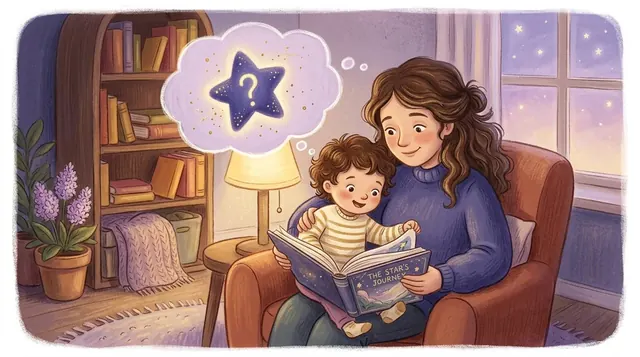
- Listen together, then talk for a minute. The "Talk about it" questions on each story page are just as good after an audio listen as after a read. "What did you think of the troll's voice?" is a fine first question and it acknowledges that the voice was not yours.
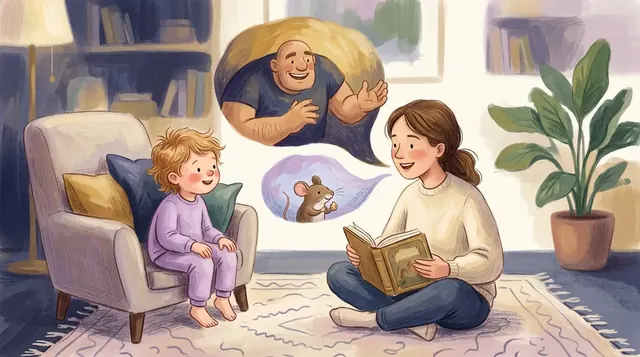
- Do the voices over the top. The device reads the narrator; you say the troll's line with it, in your troll voice. Children find this hilarious, and it puts you back inside the story.
- Take it in turns with the device. One page you, one page the voice. This is a good way to use audio with a child who is learning to read: the voice models fluent reading, and the child's ear learns what the words sound like when they flow.
What to avoid
- Autoplay and playlists. One story, then silence. Sleep needs the silence.
- Bright screens. If the child is watching the highlighted paragraph move, the screen is on and lit. Face down.
- Audio as the default. If you notice the read-aloud voice is doing bedtime four nights in five, it has drifted from second-best to habit. Take back three nights a week; your voice is the thing.
- New, exciting stories at bedtime. An adventure listened to for the first time is a wakeful thing. Use audio for the known, calm favourites at bedtime and save new stories for the daytime or the car.
- Leaving the room "just for a minute". That minute becomes the routine, and the child learns that the story is what happens instead of you.
Audio by age
Under three, the read-aloud voice has little to offer: toddlers respond to a parent's voice and face far more than to words, and a synthesised voice reading a nursery rhyme is a poor substitute for a parent singing it badly. Three to five is the age at which audio starts to work, for known stories and with a parent present. Five to eight is the sweet spot: the child follows a plot, enjoys the voice, and can take turns reading with it. Eight to twelve is where audio comes into its own as a bridge, and where the long stories earn their place, one chapter a night.
Tonight
Pick a known short story from the library, or take tonight's pick. Switch on night-light mode, turn the volume down, press Listen, and put the phone face down. Lie beside the child and do the troll. When it ends, say your closing words and take the phone away. If it is a long story you want to try, open story-book mode and stop at the first chapter; the rest is for tomorrow, and the drive to grandma's at the weekend.