The tablet in the last half hour before bed is the most common single reason a child who used to sleep well no longer does, and the fix is a swap rather than a ban. The screen is filling a slot in the evening, a slot the child has come to expect, and if you take it away and leave a gap you will get a fight every night. Put a story in the slot instead, read by you, in the same place at the same time, and most children accept it within a fortnight. This guide covers what the screen is doing, why the story is the right replacement, and a day-by-day plan for making the change.
What the screen is doing at bedtime
Three separate things, and it helps to name them, because a parent who understands them will hold the line on the bad nights.
Light. A screen is bright and held close to the face, and evening light tells the brain that it is still day and delays the hormone that starts sleep. Dimming helps but does not solve it, because the content is lit from behind.
Stimulation. What is on the screen is made to keep a child watching. Fast cuts, bright colours, loud voices, cliffhangers before the advert break. None of this is wicked, and it is harmless at four in the afternoon. In the last half hour before bed it raises the child's arousal at exactly the point the routine is trying to lower it.
The cliff. Every episode ends, and the child is never ready. The tantrum that follows "screen off" at bedtime is not about the screen; it is about being dropped off a cliff at the moment the body is least able to cope. A story, by contrast, ends on purpose, gently, at a place the reader chooses. The science of all this is set out in why bedtime stories help children sleep.
Why a story is the right replacement
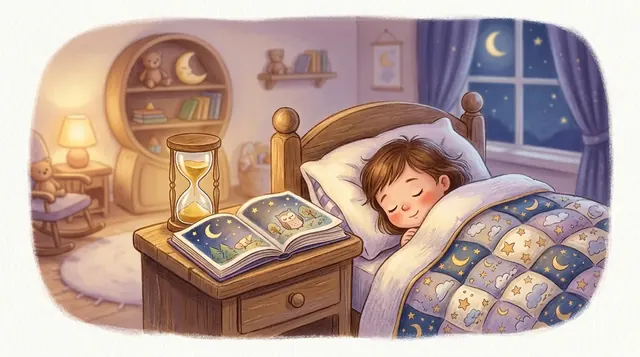
The screen was doing a job: it kept the child still and quiet in one place for twenty minutes while the adult finished the washing up. Any replacement has to do the same job, or it will not last. A story does. It keeps the child in the bed, it holds their attention, it takes about the same time, and it ends when you say it does. It also does three things the screen cannot: it dims rather than brightens the room, it slows the child rather than winding them up, and it has the adult in it. The ten minutes of a parent's undivided attention is, for most children, a better offer than the tablet, once they have had a week to find that out.
The two-week switch
Do not go cold turkey on a school night. Do it in steps, over about two weeks, announcing each one.
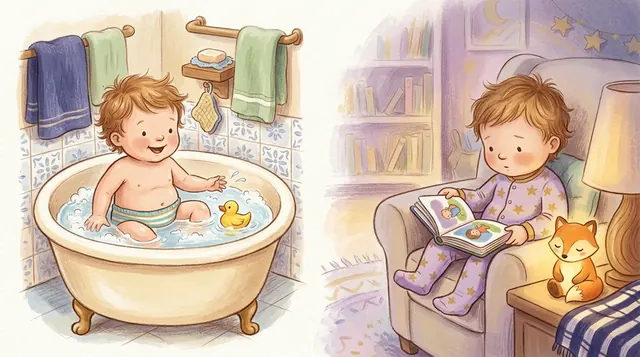
- Days one to three: announce and move earlier. Tell the child, in daylight, that from tonight the tablet goes off before the bath instead of after. Say it as a fact, not a request. Screen time happens; it just happens earlier. At bedtime, read a story in the slot the screen used to have, and make it a good one. For a child of four to seven, The Velveteen Rabbit, read over two nights, is a story most children will trade a cartoon for.
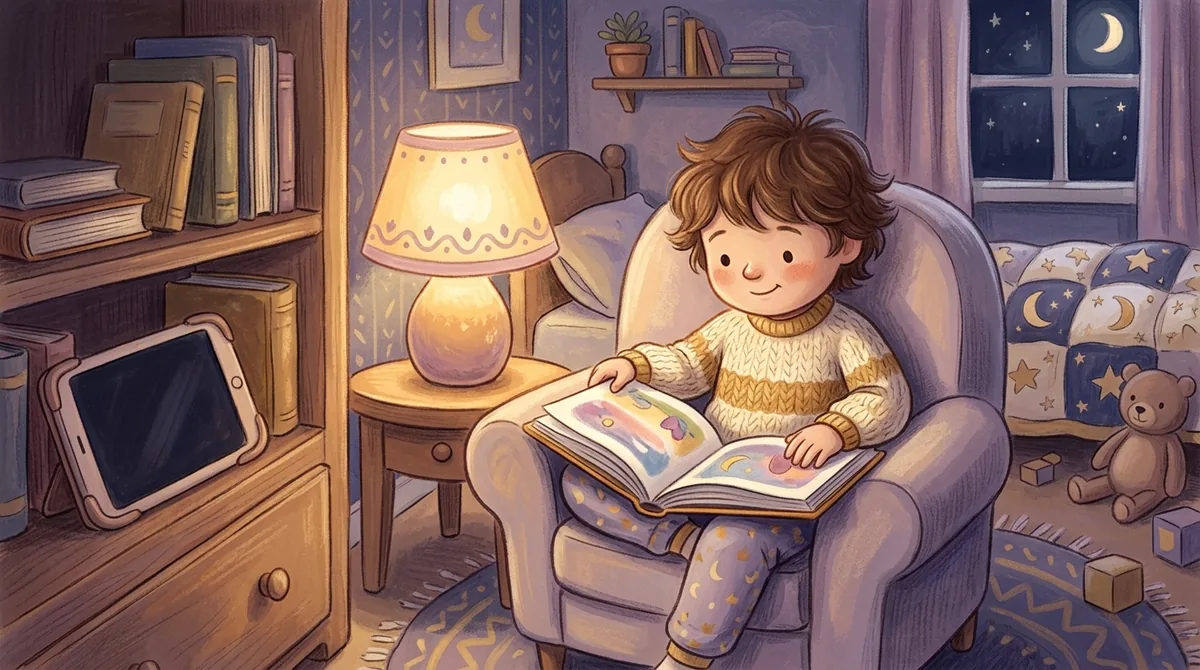
- Days four to seven: out of the bedroom. The tablet now lives in the kitchen overnight. Charge it there. A child cannot ask for what is not in the room, and by day four the story has become the thing that happens in the bed.
- Days eight to fourteen: out of the last half hour. Move the screen cut-off to thirty minutes before the routine's first step, so that the wind-down warning, the bath and the story happen with no screen anywhere in the evening's final stretch. Dim the living-room lights at the same time.
- After two weeks: hold it. The temptation is to relax on a Friday. Do not, for the first month. The routine's power comes from being kept every night, and one screen-at-bedtime evening is enough to restart the asking.
Handling the protest
There will be one, usually on nights two, three and four. Handle it as you would any change of rules: warm, brief, unbending.
- Do not argue the merits. "Screens keep you awake" is true and useless at seven o'clock. "The tablet's in the kitchen. Story time." is enough.
- Offer a choice inside the rule. "This story or that one?" A child who chooses the story has agreed to the story.
- Do not add a screen back as a reward for a good night. That teaches that the screen is the prize and the story the chore.
- Expect night three to be the worst and night five to be quiet. If the protest is still going after a fortnight of a consistent routine, something else is wrong, and it is usually bedtime being too early or the story too young.
The parent's phone
A child read to by someone who keeps glancing at their own phone learns that the phone is the more interesting thing in the room, and the lesson lands harder than any rule about tablets. Put your phone face down or in another room for the ten minutes of the story. If you are reading from a phone, that is different: the night-light dim mode on every story page exists so that the screen becomes a page, and a child who sees you reading from it with the screen dimmed and no notifications learns that the device can be a book. Turn notifications off first.
If the tablet was the story
Some families used the tablet for a story app or a video of someone reading, and worry that removing it removes the story too. It does not. The story moves into your voice. If you are too tired to read, the Listen button on every story page reads it aloud in the device's own voice and highlights each paragraph as it goes, with the screen dimmed and you lying beside the child; that is still screen-free in every way that matters, because there is no video and no cliff. How to use audio stories and the read-aloud voice well, and when they are the right choice, is covered in audio bedtime stories and read-aloud voices.
Weekends, grandparents and the car
The rule is easiest to keep when it has no exceptions, but three situations will test it. Weekends: keep the screen cut-off at the same clock time even if bedtime slides later, so the last half hour is always screen-free. Grandparents and babysitters: tell them the rule in one sentence, "no tablet after the bath, a story instead", and leave a story open on the phone with the night-light mode on so that they have something to hand. The car: a long journey home that ends at bedtime is the one place a screen is genuinely useful, and the least harmful, because the child is not in bed; switch it off when you pull in, and go straight to the routine. What you are protecting is the half hour in the bedroom, not the whole evening.
Older children
An eight-to-twelve-year-old with a phone in the bedroom is a different problem, and a harder one, because the phone is social. The rules are the same, the enforcement is a conversation rather than a decree, and the replacement still has to be good. The story that brings an older child back from the phone is a long one, read a chapter a night, with an ending worth waiting for. The Snow Queen in story-book mode, one chapter each evening, has done it for many families. The phone charges in the kitchen from the first night; there is no two-week plan for this age, only a firm start and a story that is better than the alternative.
Where this fits in the evening
Screen-free is not a routine by itself; it is a condition for one. The full sequence of a wind-down that works, from the ten-minute warning to the goodnight words, is in the bedtime routine guide, and the screen cut-off should sit half an hour before its first step.
Tonight
Tell your child, before tea, that the tablet goes off before the bath from now on. Charge it in the kitchen. If you have no story in mind, tonight's story has one picked for the whole site, or start The Velveteen Rabbit and stop halfway with a promise for tomorrow. A promise for tomorrow is the one cliffhanger that helps.