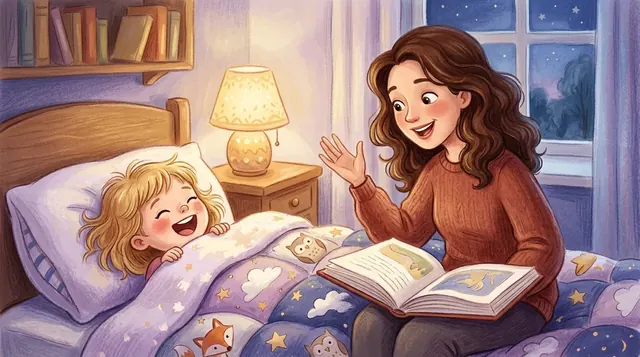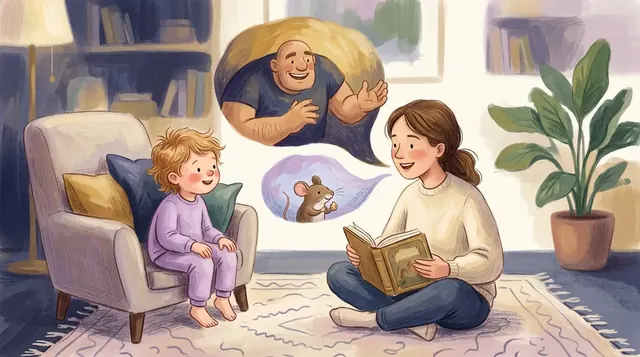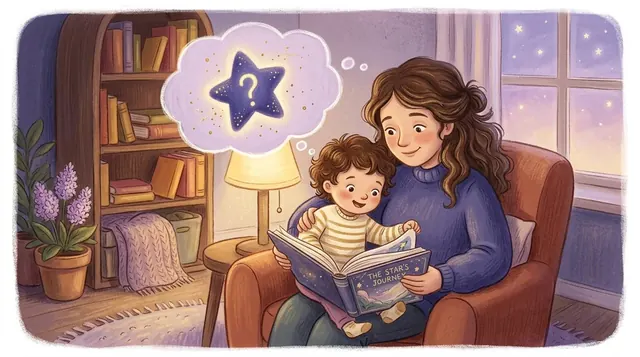
Read it again. That is the answer, and it is not a grudging one. A child who asks for The Gingerbread Man for the fifteenth night running is not being lazy or difficult, and you are not failing to broaden their horizons. They are doing something that toddlers and preschoolers are built to do: hearing the same language until it is theirs, and rehearsing a story until it is safe. This guide explains what is happening in the repeat, what the stages look like, and how to get through them without wanting to throw the gingerbread man in the river yourself.
What repetition is doing for language
Children do not learn a word from hearing it once. They need to meet it several times, in the same context, before it lodges. A bedtime story read every night is the most efficient word-learning machine there is: the same sentences, the same rare words ("scampered", "gruff", "enormous"), in the same order, with the same pictures, until the child can produce them. Studies of vocabulary learning from story books consistently find that repeated readings of the same book teach more new words than the same number of readings of different books. The guide to language development goes into the mechanism; the short version is that the repeat is the lesson.
It goes beyond words. On the fifth reading the child is learning the shape of a sentence; on the tenth, the shape of a story (a beginning, a problem, three tries, an ending); on the twentieth, they are anticipating and, in their head, narrating. When a three-year-old chants "Run, run, as fast as you can, you can't catch me, I'm the gingerbread man" along with you, they are using a rhythm, a rhyme, a contraction and a first-person pronoun in a single breath. Nobody taught them that. The story did, by being the same every night.
What repetition is doing for security
The second reason is at least as important at bedtime. A story the child knows by heart is a story with no surprises, and no surprises is the feeling a child needs just before sleep. The fox will get the gingerbread man; the smallest goat will get across the bridge; the turnip will come up. The child knows, and knowing lets them relax. This is why a child who is unsettled, after a house move, a new sibling, a hard day at nursery, will often revert to a story they had dropped months before. They are not regressing. They are reaching for something reliable, and it is a good sign that the bedtime story is what they reach for.
It is also why the same story helps with fear. A child frightened of the wolf in Little Red Riding Hood may nonetheless ask for it every night, because each repetition proves again that the wolf loses. Hearing the scary thing survived, on demand, in a safe bed, is one of the oldest uses of a story.
The stages of a repeated story
A story that a child adopts goes through recognisable stages, and it helps to know which one you are in.
- Listening. The first three or four readings. The child is quiet, watching the pictures, working out who is who.
- Joining in. The refrains come first: "Trip-trap, trip-trap" or "I'll huff and I'll puff". Then the last word of each sentence, if you leave a gap. This is the stage where you start handing lines over, and it is the beginning of reading.
- Correcting you. You skip a line to hurry things along and are told, sharply, that you missed the bit about the cow. This is memory and sequencing, and the child is right to be indignant: the story has a fixed shape and you broke it. Apologise and read the cow.
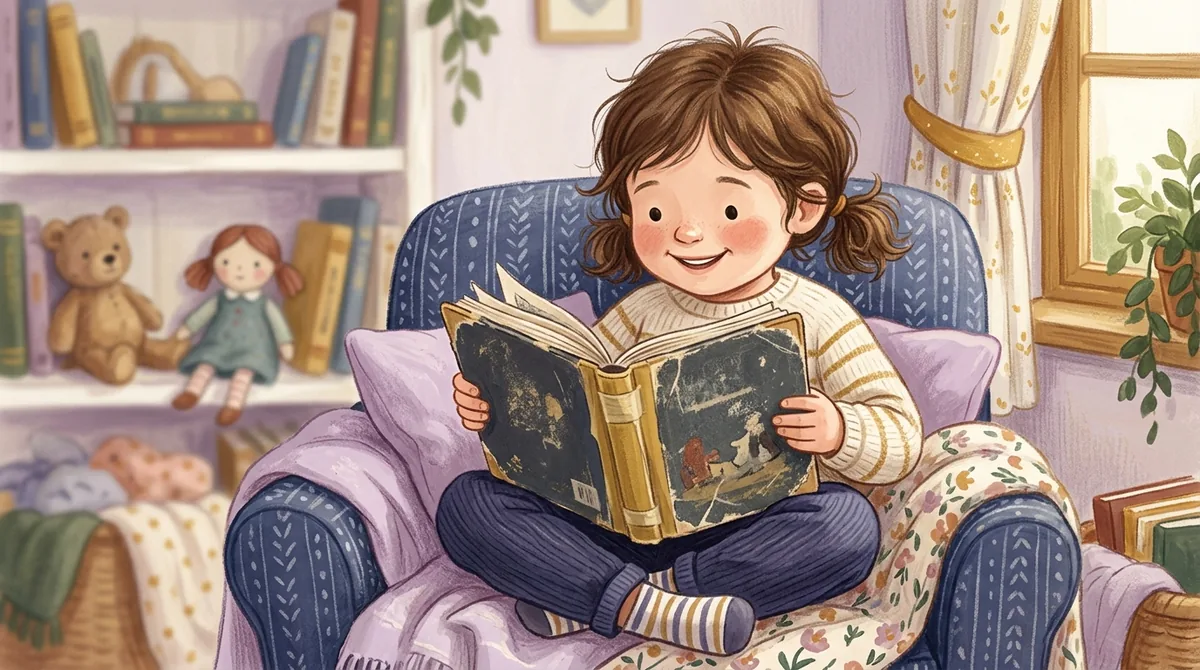
- Retelling. The child "reads" the story to a sibling, a teddy, or you, turning the pages at the right places. This is pretend reading, and it is a recognised step towards real reading. Do not correct the wording; the child is telling the story, not decoding it.
- Dropping it. One night the child asks for something else. There is no ceremony. The story has done its work and been filed. Some months later it may come back for a night or two, like an old friend, and then go again.
The whole cycle can take a fortnight or three months. With toddlers it is shorter and the stories are shorter; the toddler routine guide assumes two or three fixed stories or rhymes in the same order every night, precisely because the fixedness is the point.
How to keep your own sanity
You are allowed to be bored. Boredom is what the twentieth reading of anything feels like to an adult, and it does not mean you should stop. It means you should change what you are doing, not what the child is hearing.
- Hand over the refrains. Stop before every repeated line and let the child say it. On The Enormous Turnip that is "and they pulled, and they pulled, but the turnip would not come up" each time; by the fourth pull the child is doing all the work and you are resting.
- Change one thing at a time. A different voice for the fox tonight. A whisper for the whole last page. A pause you have never taken before, just before the bridge. The words stay the same, which is what the child needs; the delivery moves, which is what you need.
- Ask a question you have never asked. The "Talk about it" section on the story page has three to five; on the twentieth reading, pick the one you have skipped. Or ask "What if the troll had been kind?" and see what you get.
- The one-old-one-new rule. If there is time for two stories, the child chooses the old one and you choose the new one, and the old one always goes last because it is the sleepy one. Over a few weeks the new ones become candidates, and the next favourite is found without a fight.
- Use the Listen button once in a while. Every story page has a read-aloud voice with the paragraph highlighted as it goes; on a night your patience is genuinely gone, lie beside the child while the device reads, and join in for the refrains. It is a second-best, and a perfectly good one now and then.
The stories built for repetition
Some stories were made to be repeated, and if the child has adopted one of them, be grateful. The nursery rhymes are the purest case: short, rhymed, rhythmic, and older than anyone can trace, precisely because they survived by being said again and again. For toddlers, a rhyme is the right thing to repeat; see the toddler stories for the shortest ones.
Then there are the cumulative tales, where each scene adds one more character and repeats all the previous ones: The Enormous Turnip, Henny Penny, The Gingerbread Man. They are repetition inside repetition, and children under five find them almost hypnotic. And there are the threes: The Three Billy Goats Gruff, Goldilocks and The Three Bears, where the same scene is played three times with one change, so that by the third goat or the third bowl of porridge the child is a step ahead of the story and delighted about it. Nearly all of the classic tales have this shape, because they were told aloud for centuries before anyone wrote them down, and a story told aloud survives by being memorable.
When to nudge, and when to leave it alone
Mostly, leave it alone. The child will drop the story when it is finished with. But there are two situations where a gentle nudge is fair. The first is when the story is frightening the child rather than reassuring them, which you can tell because they are more unsettled after it than before; then say "Let's give the wolf a rest tonight" and read something from the gentle sleepy stories. The second is when the repeat has become a way of prolonging bedtime ("again, again") rather than a story the child is inside. The tell is that they are not listening, just asking. Then the rule is one reading, and the second reading is tomorrow.
What you should not do is hide the book or "lose" the page. Children remember, and a story that vanishes teaches them that the bedtime routine is not reliable, which is the opposite of what the routine is for.
Tonight
Read the story they asked for. Before you start, decide on the one thing you will change: a new voice, a new pause, or a new question. Stop before the refrain and let the child say it. When they correct you, thank them. And if you are honestly at the end of your patience, put on the read-aloud voice, lie down beside them, and say the refrains together. Tomorrow, add one new story from the classics before the old one. The favourite will change when the child is ready, and not a night before.