Nursery rhymes are older than most of the fairy tales in print and younger than parents tend to think. The bulk of the familiar canon was first written down in a fifty-year burst between 1744 and about 1810, in cheap little London books for children, and what came before that is mostly guesswork. The famous 'real meanings' (Ring a Ring o' Roses is about the plague, Mary Mary Quite Contrary is about Bloody Mary, Humpty Dumpty was a cannon) are almost all twentieth-century inventions with no evidence behind them. This guide sets out what is documented, what is plausible, and what is made up, and then explains why none of that matters to the one-year-old who wants Humpty again. The site's rhymes and rhyming tales live in the nursery rhymes section and the rhyming stories and poems section.
How we know what we know: the Opies
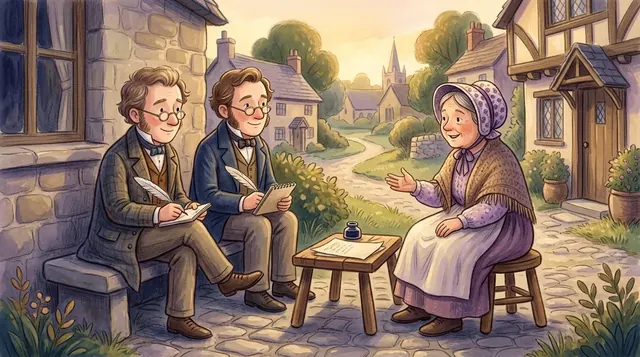
Everything reliable about nursery rhymes goes back to two people. Iona and Peter Opie, a married couple with no academic post, spent the late 1940s reading every early children's book, chapbook and broadside they could find and tracing each rhyme to its first printing. The Oxford Dictionary of Nursery Rhymes (1951) is the result: 550 rhymes, each with its earliest source, its variants and a cool assessment of the theories about it. Nothing has replaced it. The Opies' rule of thumb is worth adopting: a story about a rhyme's origin is worth exactly as much as the earliest document that supports it, and for most of the lurid ones there is no document at all.
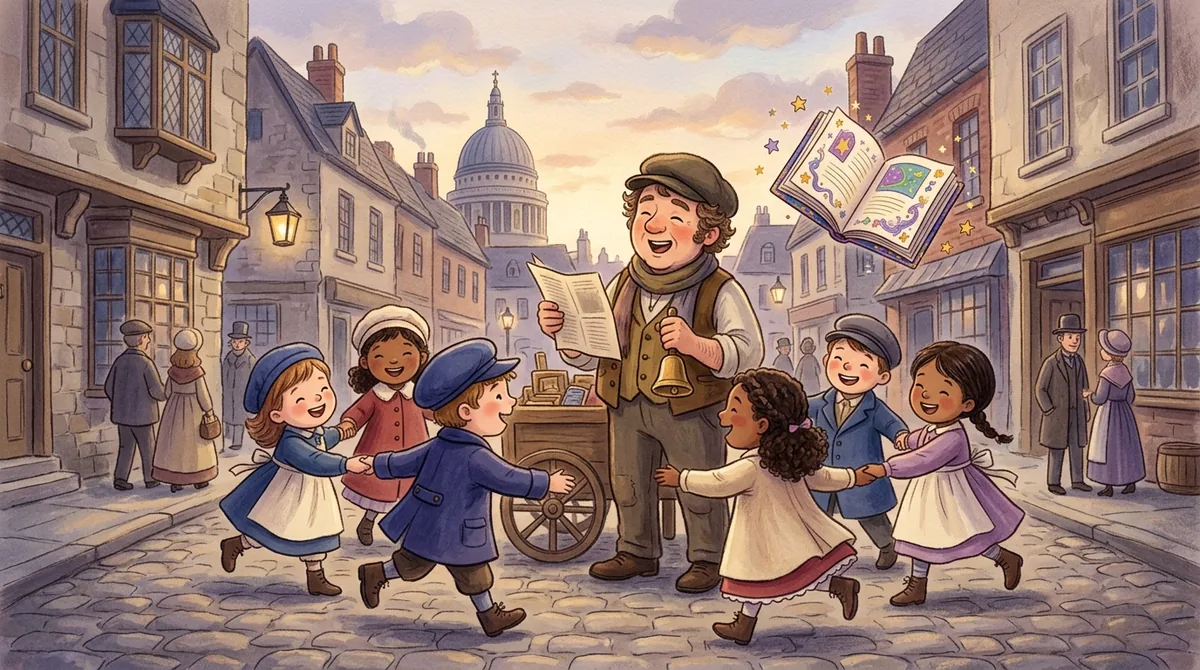
The key early books, all of which the Opies used, are these. Tommy Thumb's Pretty Song Book, published in London in 1744 by Mary Cooper, is the earliest surviving collection; only the second of its two tiny volumes has come down to us, and it already has Baa Baa Black Sheep, Hickory Dickory Dock, Sing a Song of Sixpence, London Bridge and Mary Mary Quite Contrary. Mother Goose's Melody, issued by John Newbery's firm around 1780 and possibly earlier, borrowed its title from Perrault's fairy tales and added Hey Diddle Diddle, Jack and Jill, Little Tommy Tucker and Ding Dong Bell. Gammer Gurton's Garland (1784, enlarged 1810) and Songs for the Nursery (1805) filled in most of the rest. The phrase 'nursery rhyme' itself does not appear until the early nineteenth century; before that they were simply songs, or Mother Goose's.
Six rhymes: the story people tell, and the evidence
| Rhyme | First printed | Popular theory | What the evidence says |
|---|---|---|---|
| Humpty Dumpty | 1797, in Samuel Arnold's Juvenile Amusements, with 'four-score men' rather than the king's horses | A Royalist cannon that fell from Colchester's walls in 1648 | The rhyme is a riddle with the answer 'an egg'; nothing in it says so until Lewis Carroll drew him that way in 1871. The cannon story was floated as a joke in 1956 and has no seventeenth-century support. |
| Ring a Ring o' Roses | 1881, in Kate Greenaway's Mother Goose; sung earlier in various forms | Roses are plague sores, posies are protective herbs, 'atishoo' is the death sneeze, and all fall down dead | No version with sneezing or falling exists before the late nineteenth century, many early versions have neither, and the plague reading is not recorded until the mid-twentieth century. The Opies did not accept it. It is a ring game with a dramatic curtsey at the end. |
| Jack and Jill | c.1765–80, Mother Goose's Melody, as 'Jack and Gill' | Louis XVI and Marie Antoinette losing their heads | The rhyme was in print before either was executed in 1793, which settles it. The village of Kilmersdon in Somerset also claims the hill; nobody can show why. |
| Mary, Mary, Quite Contrary | 1744, Tommy Thumb's Pretty Song Book | Mary I of England, with silver bells as thumbscrews and cockle shells as instruments of torture; or Mary Queen of Scots | Not proposed until the twentieth century; no early source links the rhyme to either queen. Silver bells and cockle shells were ordinary garden ornaments and flower names. |
| Baa, Baa, Black Sheep | 1744, Tommy Thumb's Pretty Song Book | A protest against the wool tax of 1275; or, latterly, about race | The tune is a French folk melody; the words have no documented link to any tax, and the colour of the sheep was never controversial until people said it was. |
| Hey Diddle Diddle | c.1765–80, Mother Goose's Melody | Elizabeth I and her courtiers; the constellations; a Hathor cult | The Opies list the theories and dismiss all of them. It is nonsense, which is its charm; the site's Hey Diddle Diddle, Little Red Hen turns it into a story for the same reason. |
The pattern is consistent. A rhyme is printed in the eighteenth century as a jingle for the very young; in the twentieth, someone proposes a hidden political history; the history is repeated in newspapers and on the internet until it sounds like fact. Katherine Elwes Thomas's The Real Personages of Mother Goose (1930) is the source of many of them, and it was speculation when it was written. If you want a single sentence for the dinner-party version: most nursery rhymes are exactly what they look like.
Where the rhymes did come from
That is not to say they came from nowhere. The Opies identify a handful of real sources, and they are more interesting than the myths.
- Riddles. Humpty Dumpty and Little Nancy Etticoat (a candle) are riddles whose answers were forgotten as the verse was kept.
- Ballads and street songs. Old King Cole is recorded in 1708–09; several rhymes are the memorable verse of a longer, lost song, which is why they seem to start in the middle.
- Counting and knee games. One, Two, Buckle My Shoe and This Little Piggy are teaching devices; Ride a Cock Horse is a knee-bouncer, and the words were always secondary to the bounce.
- Named authors. A few 'anonymous' rhymes have known writers. Twinkle, Twinkle, Little Star is by Jane Taylor, published in Rhymes for the Nursery in 1806; Mary Had a Little Lamb is by Sarah Josepha Hale, 1830.
- Chapbook tales. Some nursery classics began as tiny printed stories rather than songs. The History of Little Goody Two-Shoes, published by John Newbery in 1765, gave English the phrase, and the site's Goody Two Shoes retells the tale of the orphan with one shoe who becomes a teacher.
The nursery tales that behave like rhymes
Alongside the verse rhymes sits a family of short prose stories that toddlers treat in much the same way, because they are built on the same engine: repetition with an accumulating list. Folklorists call them cumulative tales. Henny Penny and Chicken Licken are two names for one story in which the sky is falling and the cast grows by one animal per page; Joseph Jacobs fixed the English version in 1890, but the Opies and others trace the same plot across Europe and India. The Gingerbread Man, first printed in an American magazine in 1875, is a runaway-food tale with cousins in Norway and Scotland. The Enormous Turnip is Russian and consists entirely of adding pullers. The Three Billy Goats Gruff is a rhyme in the shape of a story: trip-trap, trip-trap, three times. These longer tales now sit on their proper story shelves; the nursery rhymes section contains only the verses themselves.
Why toddlers need the rhymes regardless
None of the history above matters to a child of eighteen months, and the reason is the reason rhymes exist. A nursery rhyme is a sound object: strong beat, close rhyme, a shape short enough to hold whole in the memory. Children hear the pattern of their language in it before they can parse a sentence. The research on early literacy consistently finds that children who know a stock of rhymes at three find it easier to hear the separate sounds in words at five, and that hearing sounds in words is what reading is. Beyond that, a rhyme is the shortest possible complete bedtime ritual: twenty seconds of your voice, in a pattern they know, that ends the same way every night.
So the practical advice is simple. Say them, do not explain them, and say the same ones. The toddlers' stories on this site are chosen for the same reasons, and the toddler bedtime routine guide shows where a rhyme fits in the last five minutes. If your child asks what Humpty was, tell them an egg; if they ask why, tell them he is a riddle from a long time ago and nobody wrote the answer down. That is both true and a better story than the cannon.
Tonight
For a toddler, say two rhymes you know by heart and then read Hey Diddle Diddle, Little Red Hen, which joins the nonsense rhyme to a story. For a three-year-old, Henny Penny, with a different voice per animal, and let them say 'the sky is falling' each time. For a four-year-old who is starting to ask where things come from, Goody Two Shoes, followed by the sentence 'that story is older than Grandma's grandma'. The history of fairy tales tells the longer story of how these and the fairy tales got to the nursery, and the rhyming stories and poems are the next step up once the rhymes are worn out.